

Iceland · Nordic · History
History of Iceland
Settlement, Althing, volcanoes, and a republic in the North Atlantic.
Watch History of Iceland on YouTube@sagastube
Companion essay
Read the history of Iceland
Iceland is a late-settled island in the North Atlantic — volcanic, glaciated, and for most of its history sparsely inhabited. It also has one of the oldest surviving parliamentary assemblies in Europe. The story runs from Celtic landfalls and Norse settlement to a small republic that won the Cod Wars and later survived a banking crash.
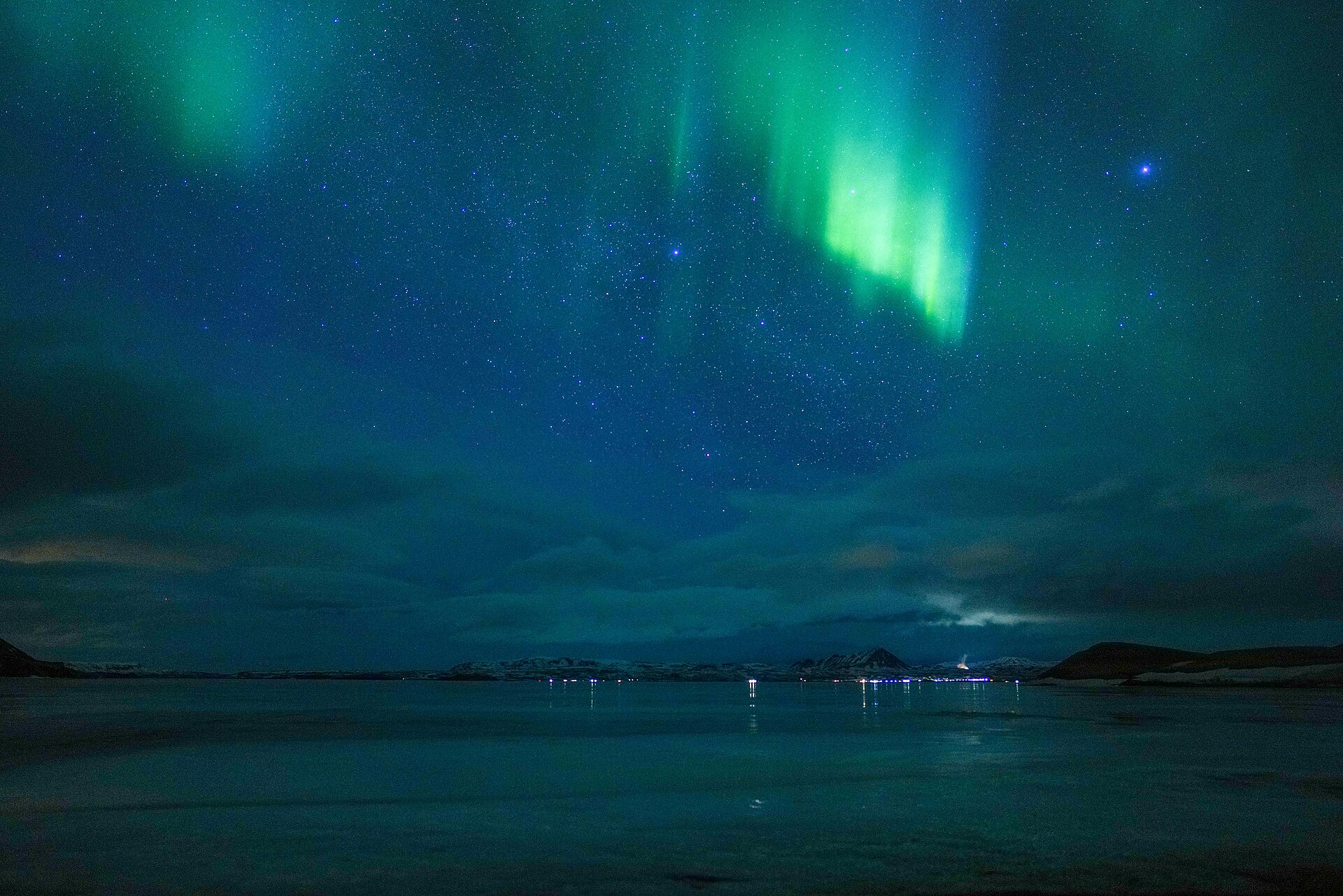
Northern lights over Mývatn — the island of fire, ice, and long winter skies.
Wikimedia Commons · File:039 Northern lights over Mývatn (Iceland) Photo by Giles Laurent.jpg_Photo_by_Giles_Laurent.jpg) · Photo by Giles Laurent · CC BY-SA 4.0
Discovery and Smoke Bay
Because Iceland is an island, its history begins with arrival. Celtic monks are thought to have reached it around the seventh or eighth century, which would make Iceland one of the last large islands on earth to receive people. That Celtic presence did not last.
In the middle of the ninth century, Norwegians sailing to Shetland and the Faroes sometimes drifted off course and found land to the west. Who first set foot there is still disputed. Tradition names Naddodd of Norway among the earliest; he called the island Snowland. Flóki Vilgerðarson may have been the first to sail there on purpose. He explored the coasts, and when he saw a valley of ice — or ice drifting on the sea — he is said to have given the island the name that stuck: Iceland.
Not long afterwards a Norwegian chieftain — traditionally Ingólfr Arnarson, around 874 — founded the first lasting settlement at Reykjavík. The name means roughly “Smoke Bay,” from the geothermal steam that still marks the place. Other chieftains followed with families and thralls. Most of the settlers came from Norway, and the population grew.
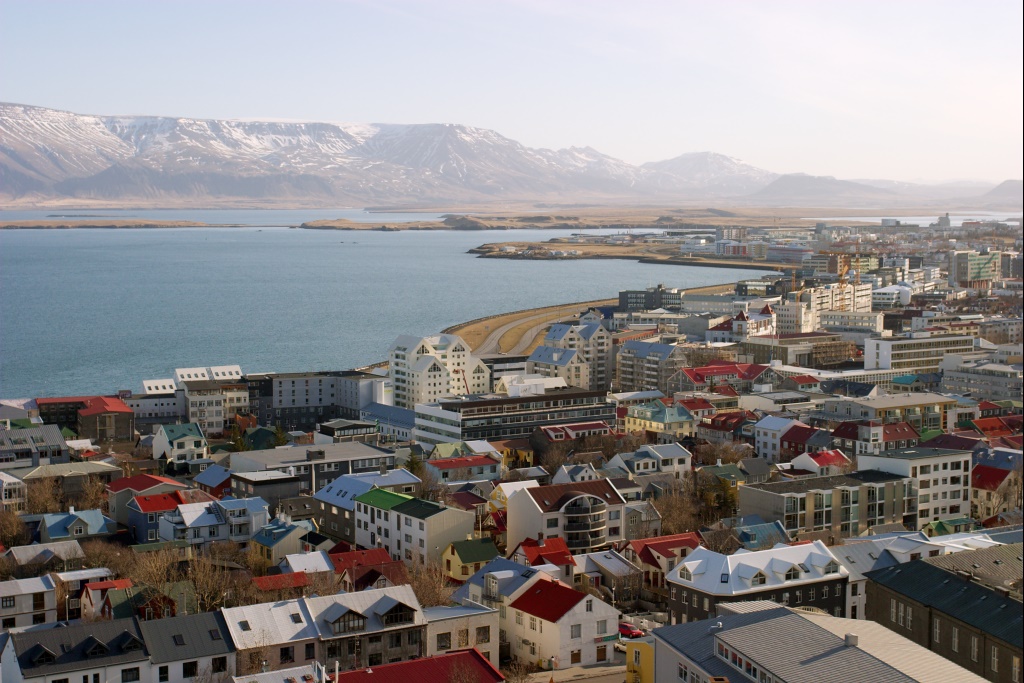
Reykjavík from Hallgrímskirkja — Smoke Bay, where geothermal steam named the first settlement.
Wikimedia Commons · File:Reykjavik from Hallgrimskirkja.jpg · Photo by Trsqr · CC BY-SA 1.0
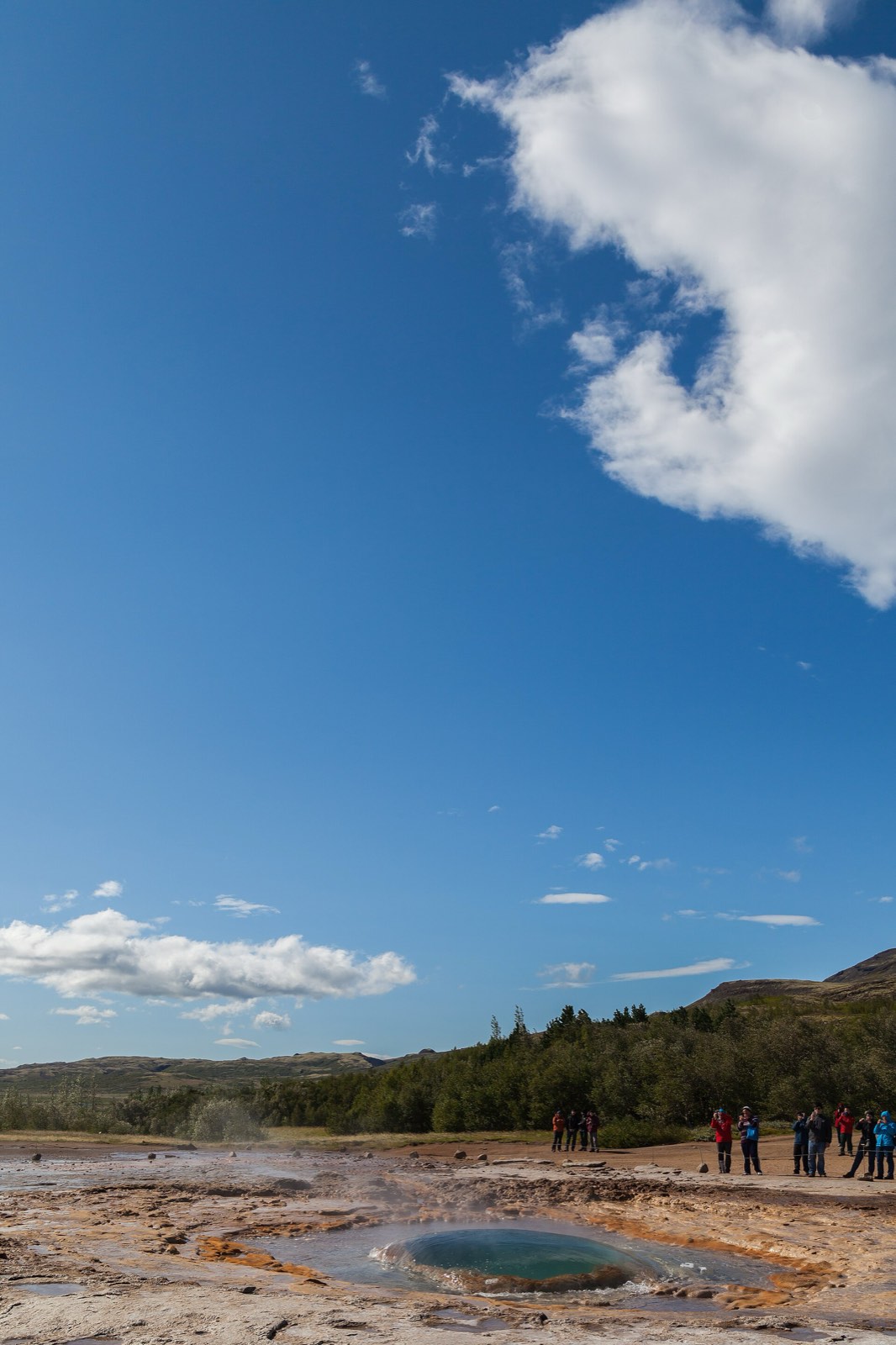
Strokkur erupting in the Geysir field — the geothermal force behind “Smoke Bay.”
Wikimedia Commons · File:Strokkur, Área geotérmica de Geysir, Suðurland, Islandia, 2014-08-16, DD 083.JPG · Photo by Diego Delso · CC BY-SA 4.0
Commonwealth
In 930 the Althing was founded at Þingvellir as a gathering of chieftains for law and judgment. At first the laws were not written down. They were held in memory by the Lawspeaker and recited at the assembly. A common law, drawn from Norway’s Gulating tradition, bound the island together. Out of that assembly a nation took shape: the Icelandic Commonwealth.
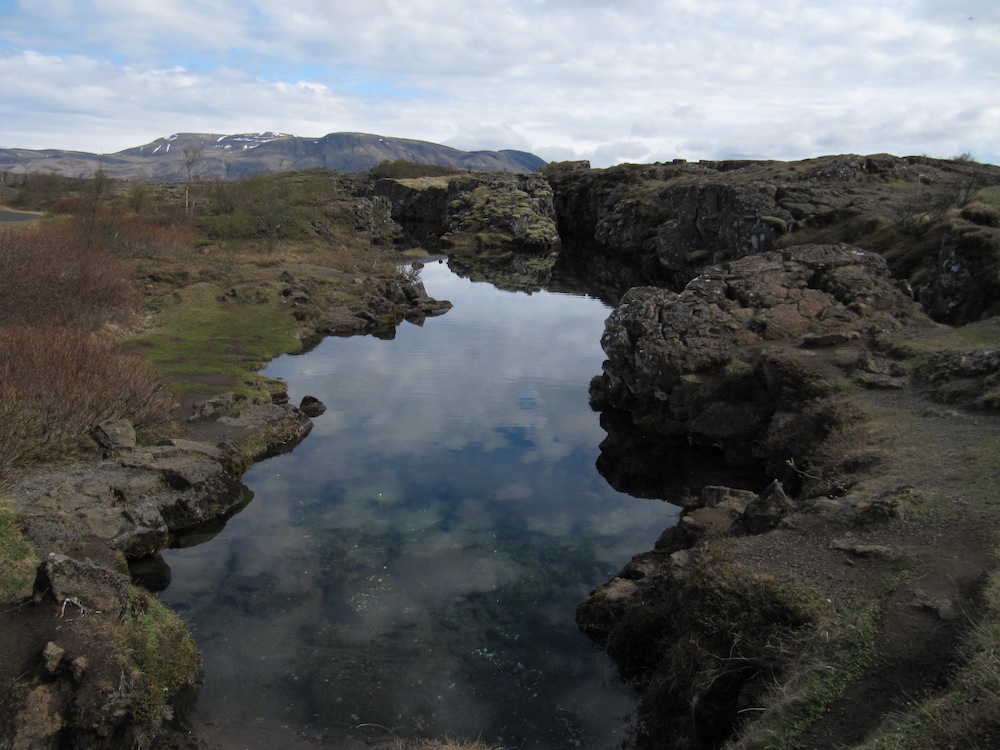
Þingvellir — where the Althing met from 930, and a commonwealth learned to govern itself.
Wikimedia Commons · File:Þingvellir.jpg · Photo by JJ.sandal · CC BY-SA 3.0
Into that world came a Norwegian exile’s son later called Erik the Red. Exiled from Iceland in turn, he founded the first Norse settlement on Greenland. His son Leif Erikson, likely born in Iceland, sailed from Greenland to North America and left a short-lived foothold at Vinland, in what is now Newfoundland — the first known European landing in the Americas. Why the settlement failed is still unknown.
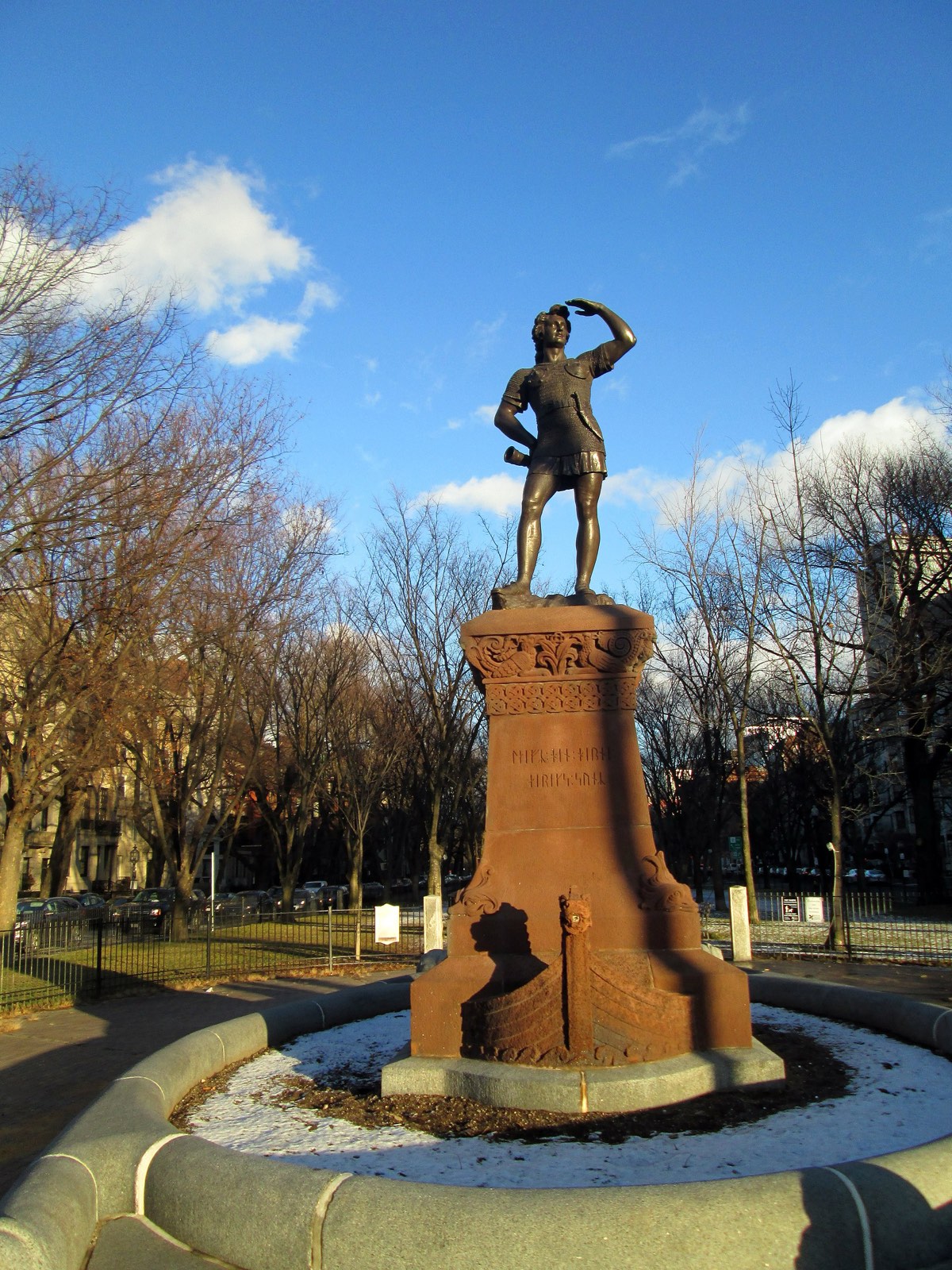
Statue of Leif Erikson in Boston — the Icelander who reached Vinland from Greenland.
Wikimedia Commons · File:Leif Eriksson statue, Boston.jpg · Photo by Rob Larsen · CC BY 2.0
Icelanders worshipped the old gods, Odin and Thor among them. In the year 1000 the Althing decided, by law, that the whole country would become Christian. The change is remembered as comparatively peaceful. In the same period they began to write the laws down.
Under Norway, then Denmark
From the eleventh century power narrowed to a handful of families. Two opposing kin-groups fought over the island in open battle. Norwegian kings drew chieftains into vassalage in order to gain a hold on Iceland, and over time the most powerful men became the king’s men. After decades of conflict the leading chieftains accepted Norwegian sovereignty and a union with the Norwegian crown.
That Norwegian overlordship later passed into the Kalmar Union — Denmark, Sweden, and Norway under one monarch, with Denmark as the leader — and Iceland went with it as a Norwegian overseas dependency. Under Danish rule the island was hit by earthquakes, volcanic eruptions, and plague. The Black Death is thought to have killed as much as two thirds of the population, leaving Iceland weak. In the early fifteenth century Hanseatic merchants controlled its trade.
Monopoly, pirates, Laki
The Reformation reached Iceland in the sixteenth century. It met resistance at first, because the Catholic Church was strong, but it succeeded all the same.
In 1602 the Danish crown imposed a trade monopoly, meant to cut out the Hansa. The monopoly brought poverty. Combined with natural disasters, it sent the population swinging up and down for generations. In 1627 Barbary pirates raided the coasts and carried hundreds of Icelanders into slavery. In 1783 the Laki eruption killed some nine thousand people and about four fifths of the livestock. The famine that followed took roughly a quarter of those who remained.
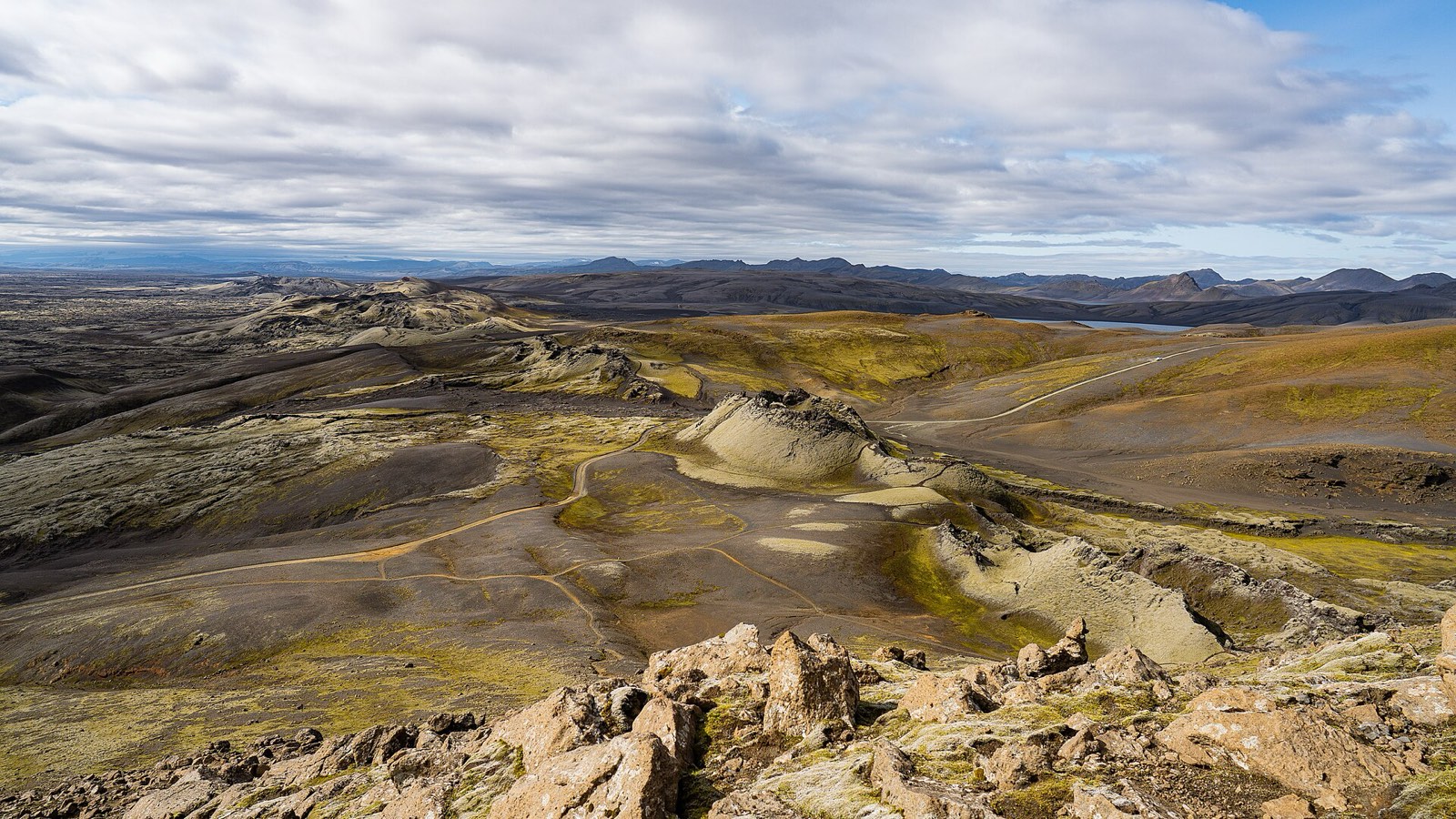
The Laki crater row — the 1783 eruption that starved a quarter of Iceland.
Wikimedia Commons · File:Laki Krater.jpg · Photo by Areuland · CC BY 4.0
Kingdom, then republic
When the Napoleonic Wars broke Denmark–Norway, Denmark was on the losing side. The Treaty of Kiel in 1814 separated the two kingdoms and gave Norway to Sweden, but left Iceland with Denmark as a dependency.
Some decades later Icelanders emigrated in large numbers to the Americas, mainly Canada. National romantic ideas from continental Europe took hold, and an independence movement grew. In 1918 Iceland was recognised as a fully sovereign state, the Kingdom of Iceland, in personal union with Denmark.
Iceland stayed neutral through the First World War. After the war there was a stretch of prosperity, then the Great Depression. The Spanish Civil War halved the saltfish export and damaged the island’s economy again.
In 1940 Germany occupied Denmark. Iceland had to conduct its own foreign affairs and claimed neutrality. Britain invaded the same year and occupied the island for the rest of the war, arguing that Germany must not get there first. In 1944 a referendum ended the union with Denmark, and the Republic of Iceland was born.
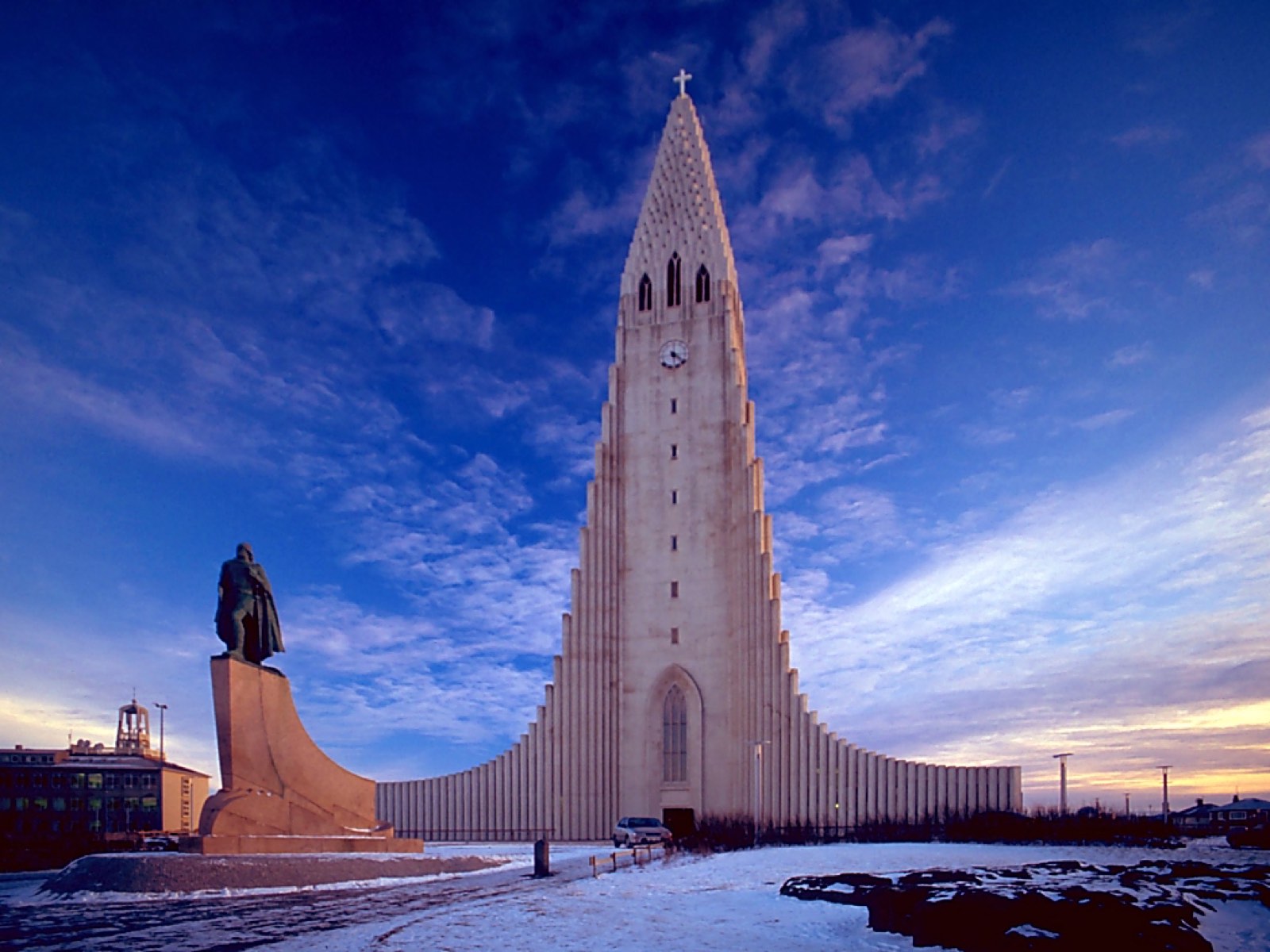
Hallgrímskirkja in Reykjavík — a modern landmark of the independent capital.
Wikimedia Commons · File:Hallgrímskirkja.jpeg · Photo by Andreas Tille · CC BY-SA 4.0
Cod, crash, and recovery
Iceland had prospered during the war and amassed large currency reserves in foreign banks. With American Marshall Aid it laid the foundations of an industrial economy. It became a charter member of NATO in 1949, with the reservation that it would never take offensive action against another nation.
From the 1950s to the mid-1970s Iceland fought a series of militarised disputes with the United Kingdom known as the Cod Wars. The conflict was about Iceland’s extension of its fishery limits. Each round ended with wider Icelandic waters, and Iceland prevailed.
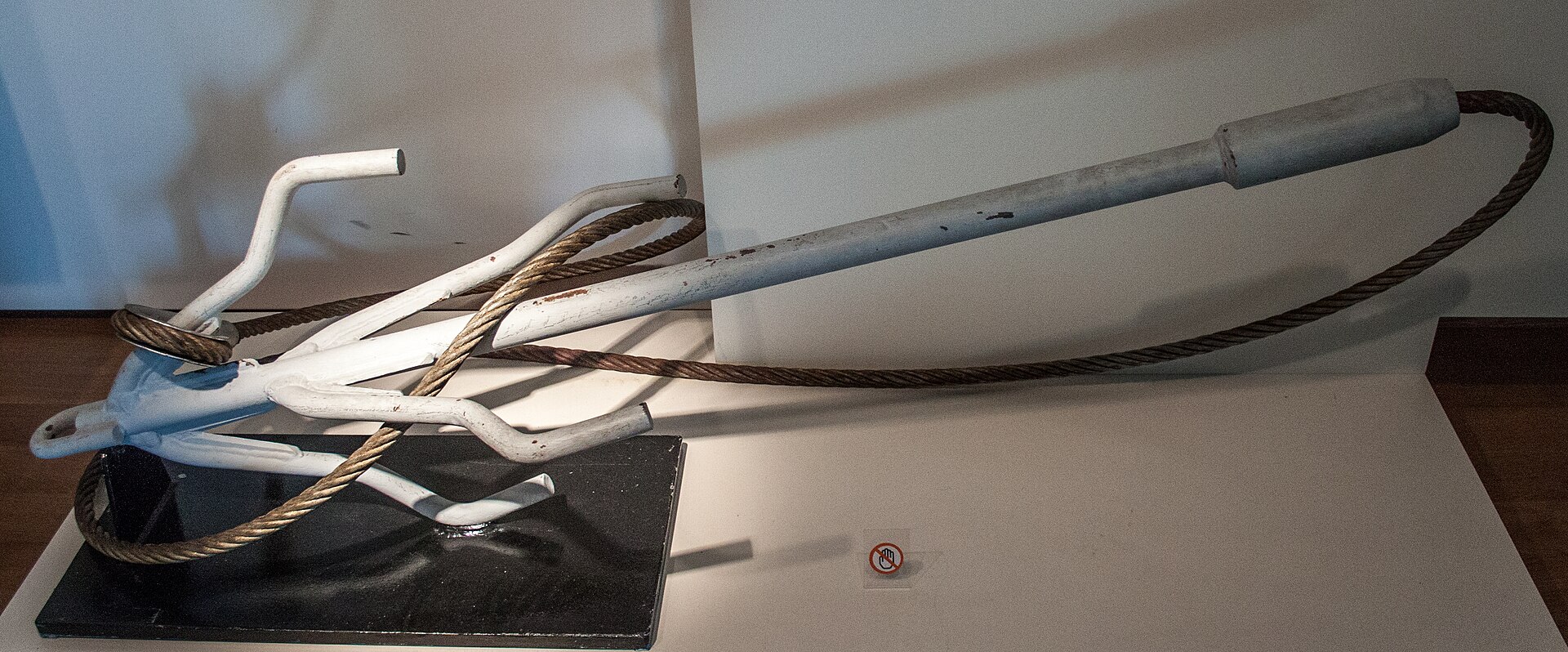
A Cod Wars trawl-wire cutter — the tool that helped Iceland push its fishing limits outward.
Wikimedia Commons · File:Trawl wire cutter from the cod wars.jpg · Szilas · Public domain
In 1994 membership of the European Economic Area opened finance, biotechnology, and manufacturing beside fish. The 2008 financial crisis collapsed the banks and forced heavy foreign borrowing. Tourism later helped the recovery. Some 330,000 people live here now, in one of the world’s most developed states — a late-settled island that wrote its own law early, and kept it.
Continue on the map
Related films
Finland · Nordic
History of Finland
Lakes, two crowns, and a republic forged in winter war — the history of Finland.
Sweden · Nordic
History of Sweden
Vikings, Vasa, and a great power that learned to live without an empire.
Norway · Nordic
History of Norway
Fjords, kings, occupation, and oil — the history of Norway.
Lithuania · Baltic
History of Lithuania
From ancient pagan roots to Europe’s largest medieval state — and the long fight back to independence.