

Norway · Nordic · History
History of Norway
Fjords, kings, occupation, and oil — the history of Norway.
Watch History of Norway on YouTube@sagastube
Companion essay
Read the history of Norway
Norway is a long Atlantic coast of fjords and northern light — and, for a thousand years, of ships, kings, unions, and oil. Its history runs from the receding ice to a modern welfare state funded by the North Sea.
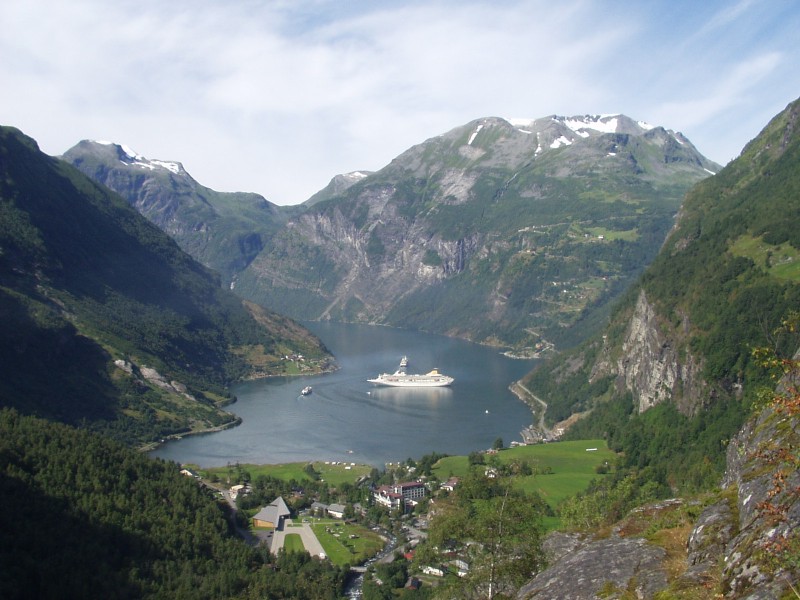
Geirangerfjord from Flydalsjuvet — the Atlantic coast that opened when the ice withdrew.
Wikimedia Commons · File:Geirangerfjord from Flydalsjuvet.jpg · Photo by Sgm · Public domain
Ice, farms, and the thing
After millennia under ice, the Norwegian coast opened. The first people along it lived by sealing, hunting, and fishing; farming came later. In the Nordic Bronze Age yields rose and trade began.
Celtic ironworking brought the Iron Age. Families grew into clans. Disputes were settled at a thing — a sacred assembly where free men of the district met and fixed punishments. Some farmers rose as chieftains, hired retainers into a hird, and ruled a wider stretch of country.
Longships and petty kings
Norwegians and their neighbours had been building boats for generations. That craft produced the longship — fast, shallow-draught, equally at home on river and open sea — and with it the Viking Age.
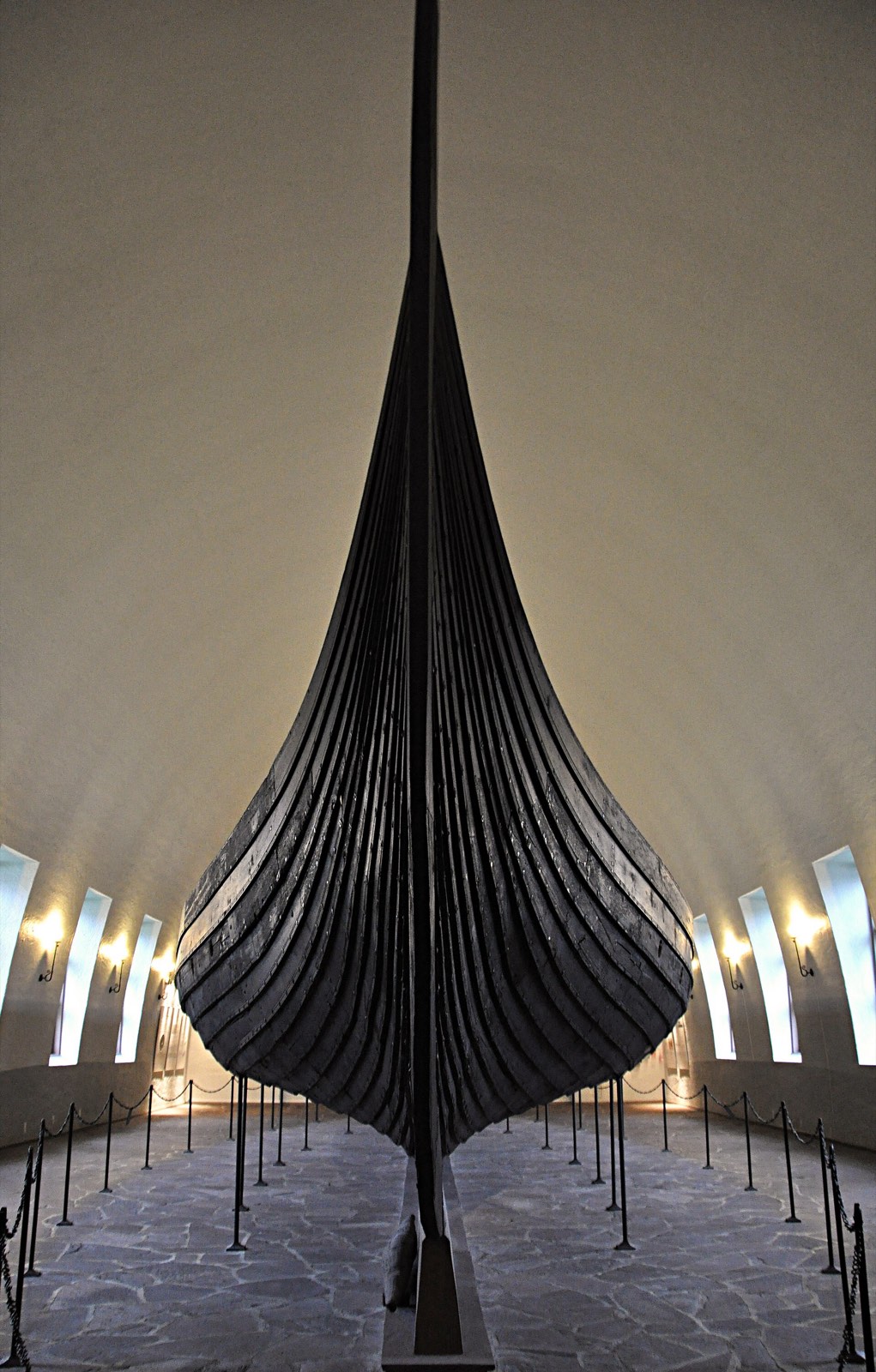
The Gokstad ship in Oslo’s Viking Ship Museum — a late-ninth-century longship raised from a burial mound.
Wikimedia Commons · File:The Gokstad ship. Viking Ship Museum, Oslo, Norway (Vikingskipshuset på Bygdøy) 2011.jpg_2011.jpg) · Photo by Bochum1805 · CC BY-SA 2.0
Longships carried Norwegians to islands across the North Atlantic. Thin farmland at home, and the pull of the unknown, both played their part.
Norway was then a patchwork of petty kingdoms. Legend has it that one of those kings, Harald Fairhair, unified the realm after Gyða Eiríksdóttir said she would marry him only when he had done so.
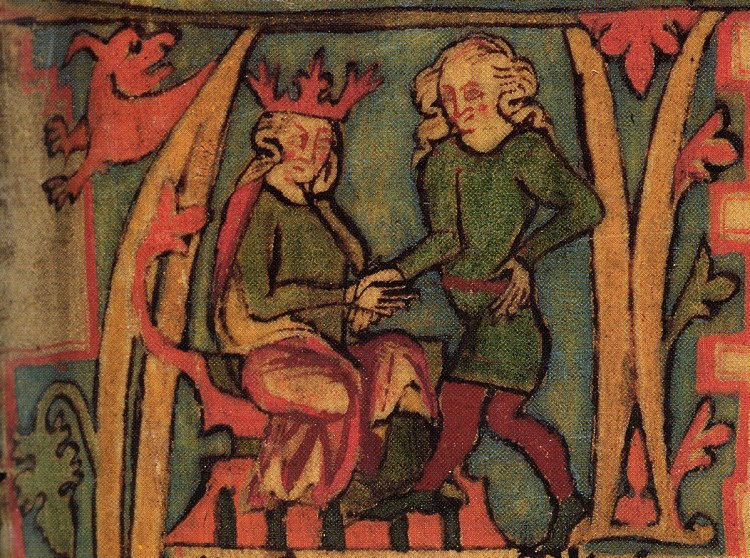
Harald Fairhair in the Flateyjarbók — the king who, by saga, bound the petty realms into one.
Wikimedia Commons · File:Flateyjarbok Haraldr Halfdan.jpg · Flateyjarbók / Tokle · Public domain
Cross and crown
Harald’s successors faced strong regional leaders and the Danes. By the late tenth century Christianity had also become a political weapon.
Hailed king in 995, Olaf Tryggvason set out to convert Norway by every means at his disposal. Enemies gathered. At the sea battle of Svolder he faced more than seventy ships from Denmark, Sweden, and the Jarls of Lade with eleven of his own. Ship by ship they fell. On his flagship, the Long Serpent, he fought to the end and leaped into the sea, never seen again.
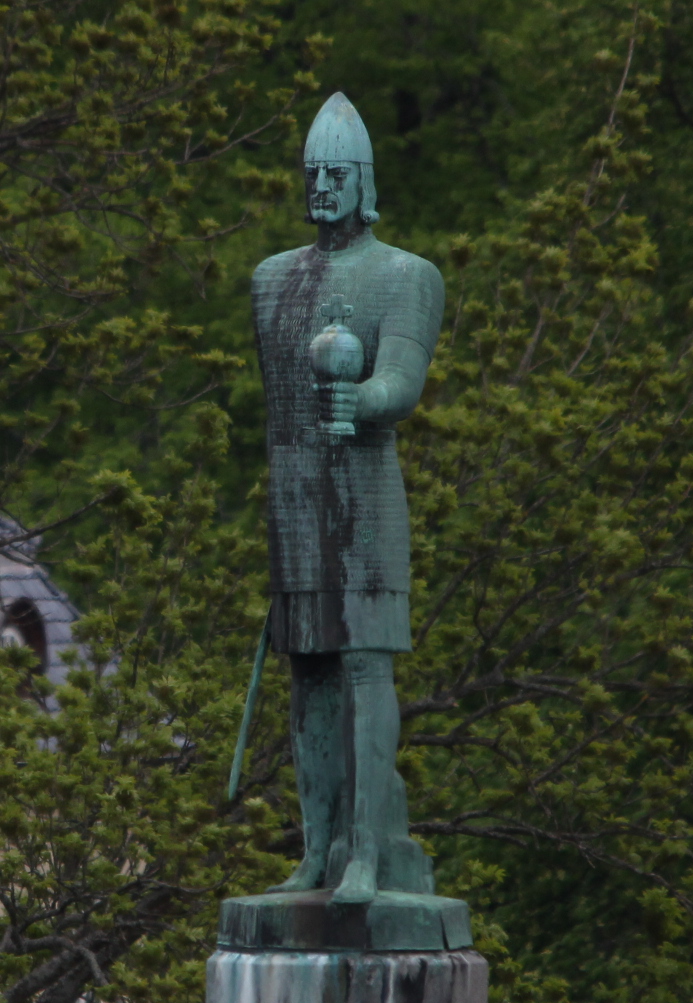
Statue of Olav Tryggvason in Trondheim — the convert-king who fell at Svolder.
Wikimedia Commons · File:Olav Tryggvason (statue) (cropped).jpg_(cropped).jpg) · Photo by Vegard Ottervig · CC BY-SA 3.0
In 1015 Olaf Haraldsson — later Saint Olaf, of Fairhair’s line — came back from a Viking voyage and was elected king. He held the country while the Danes were busy in England. In 1028 Cnut the Great allied with the Jarls of Lade and drove him into exile. Olaf returned when the last Lade jarl drowned, and was killed in Trøndelag. Denmark took Norway.
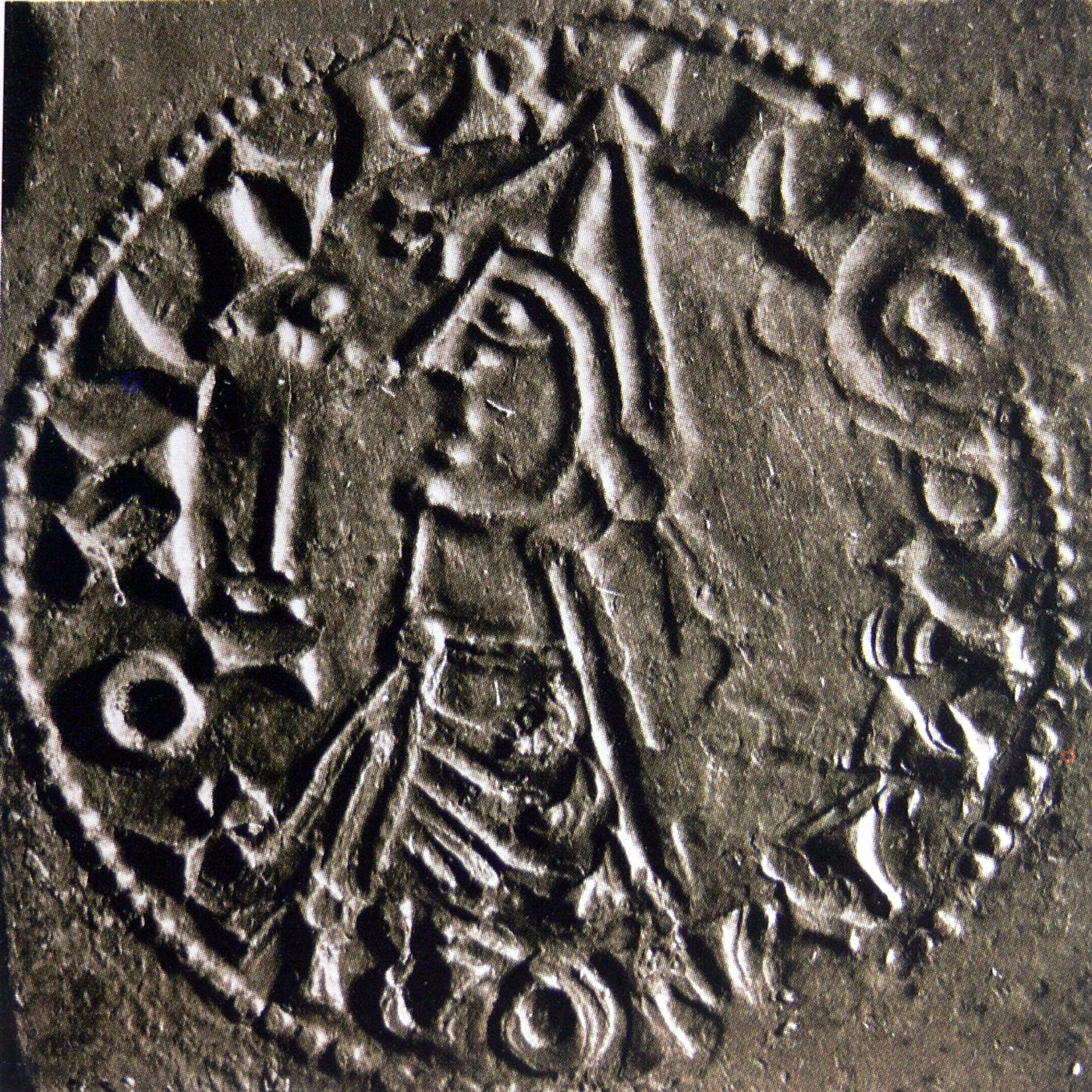
Saint Olaf — Olaf Haraldsson, killed in Trøndelag and later Norway’s patron saint.
Wikimedia Commons · File:Olav der Heilige07.jpg · Unknown · Public domain
Danish overlordship ended in 1035, when Magnus the Good returned and ruled an independent kingdom.
Saint Olaf’s half-brother Harald Hardrada had fled after Olaf’s death. He came back in 1045 with Byzantine wealth and experience, bought a share of the throne from Magnus, and ruled alone when Magnus died. He founded Oslo, today’s capital. Claiming the English throne, he sailed with some three hundred ships, was surprised near York, and fell at Stamford Bridge in 1066. Two weeks later William the Conqueror broke the weakened English army and changed England’s fate. Norwegians have never quite stopped wondering what might have followed if Hardrada had won.
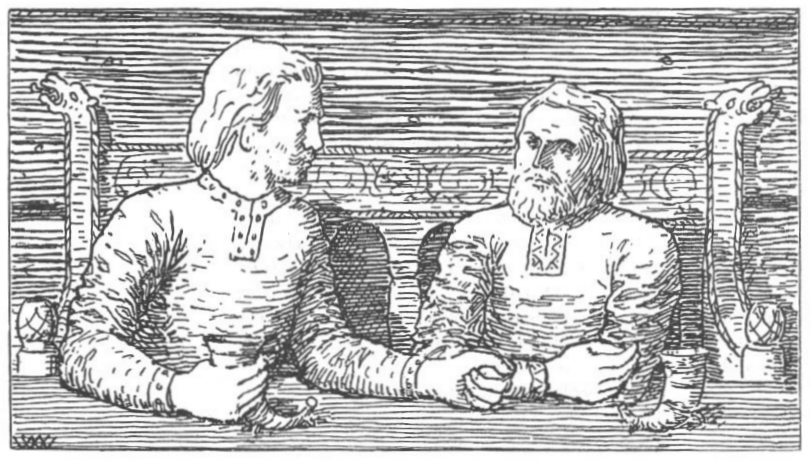
Harald Hardrada with Svein, from Wilhelm Wetlesen’s saga illustration.
Wikimedia Commons · File:Harald Hardraades saga-Harald og Svein-W. Wetlesen.jpg · Wilhelm Wetlesen · Public domain
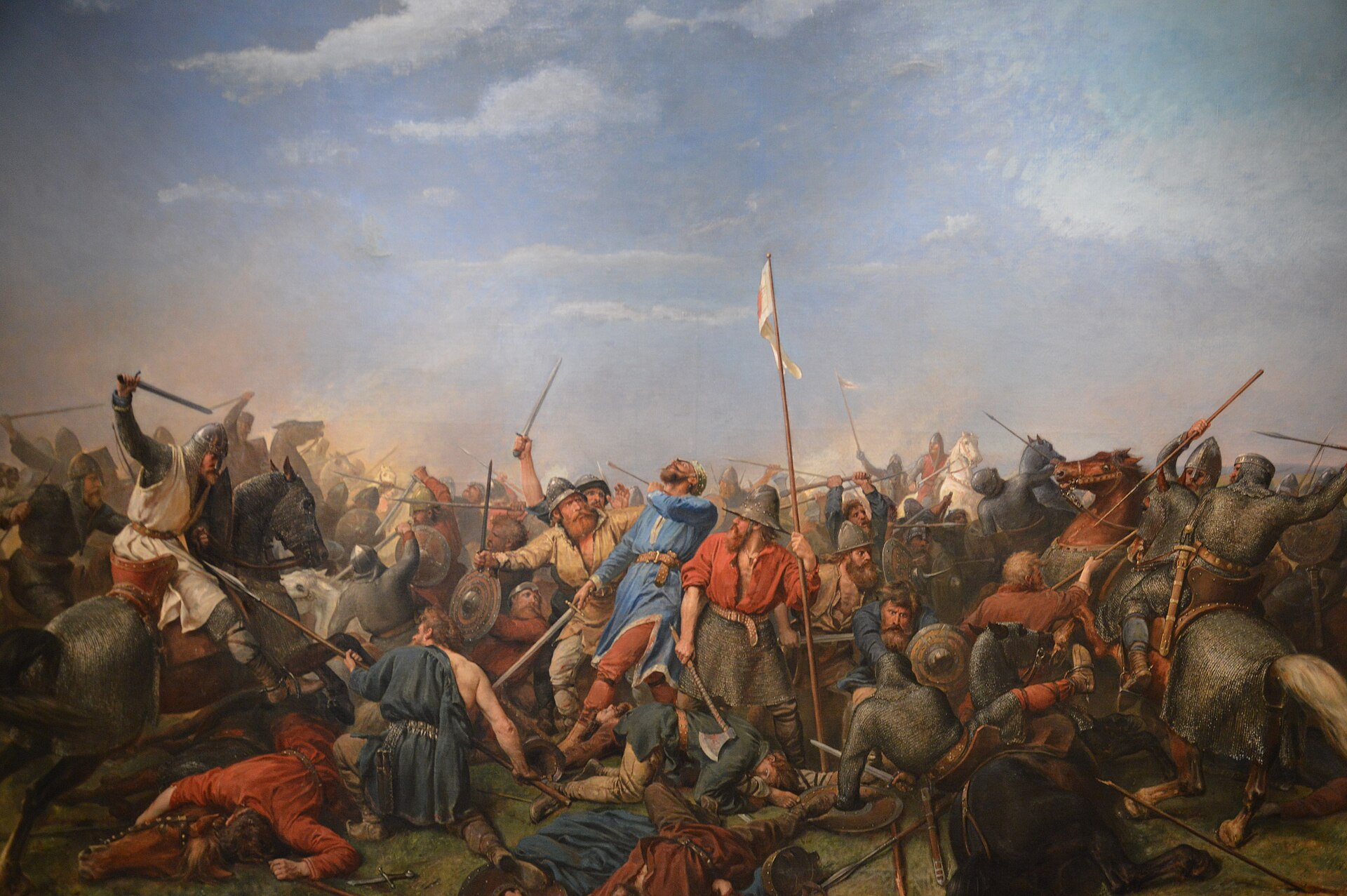
Peter Nicolai Arbo’s Battle of Stamford Bridge (1870): Hardrada’s last fight in England, 1066.
Wikimedia Commons · File:Arbo - Battle of Stamford Bridge (1870).jpg.jpg) · Peter Nicolai Arbo · Public domain
Golden Age, plague, and fish
After the Viking Age the country turned inward. Thousands of farms were cleared, and for a time the realm was relatively peaceful. In 1130 unclear succession laws opened a long civil war. Håkon Håkonsson defeated his last rival in 1240, fixed the succession, and opened what Norwegians call the Golden Age: wider borders, a union with Sweden, and deeper ties to European courts and culture.
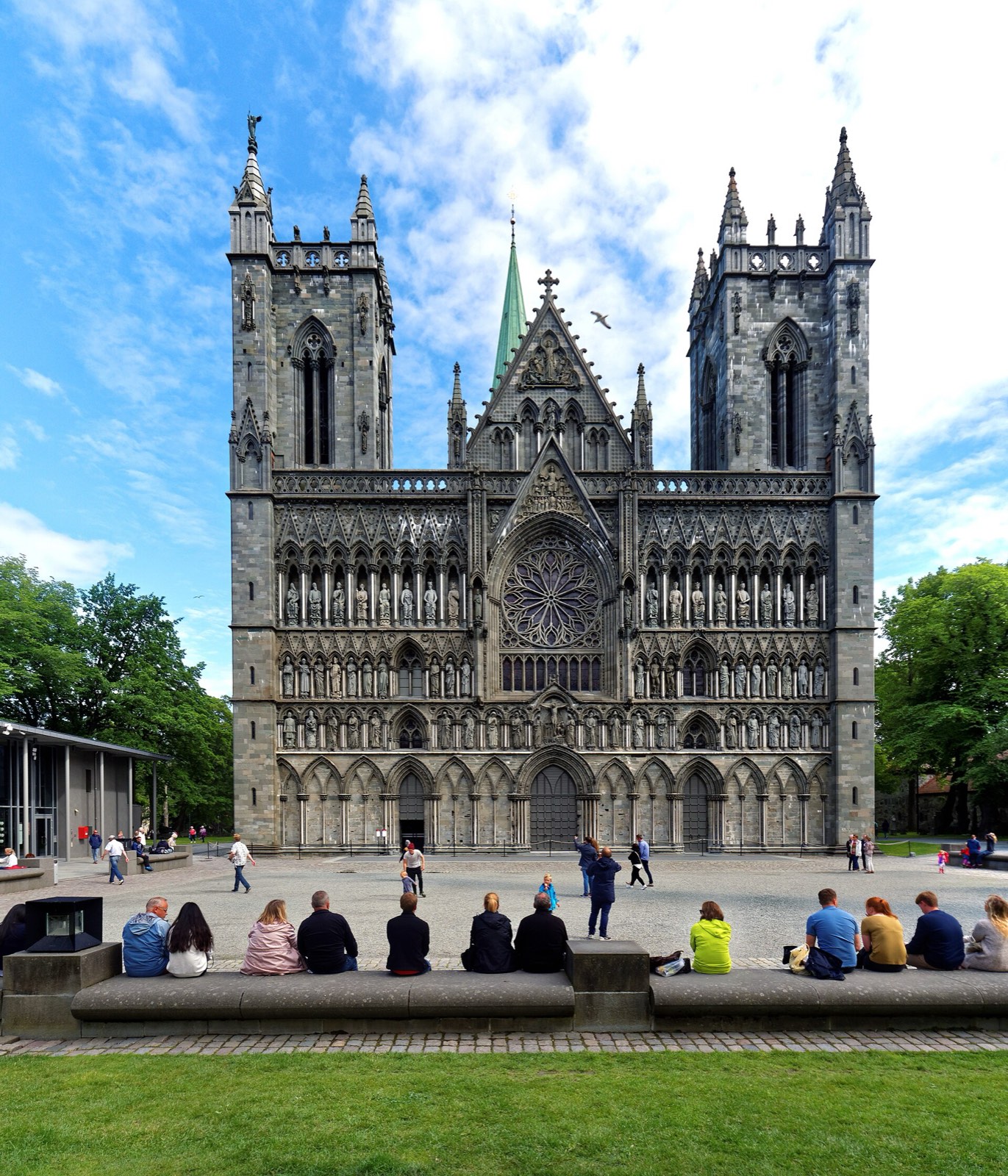
Nidaros Cathedral in Trondheim — the Gothic heart of the medieval kingdom.
Wikimedia Commons · File:Die Nidaros Kathedrale in Trondheim. 05.jpg · Photo by Holger Uwe Schmitt · CC BY-SA 4.0
In the summer of 1349 a ship brought the Black Death to Bergen. Roughly a third of the people died in the first year, and more died after. Farms stood empty, land prices collapsed, and landowners and the crown both lost revenue.
In the same period the Hanseatic League established itself in Norwegian towns. They shipped dried fish to Europe and built a commercial fishery that still matters.
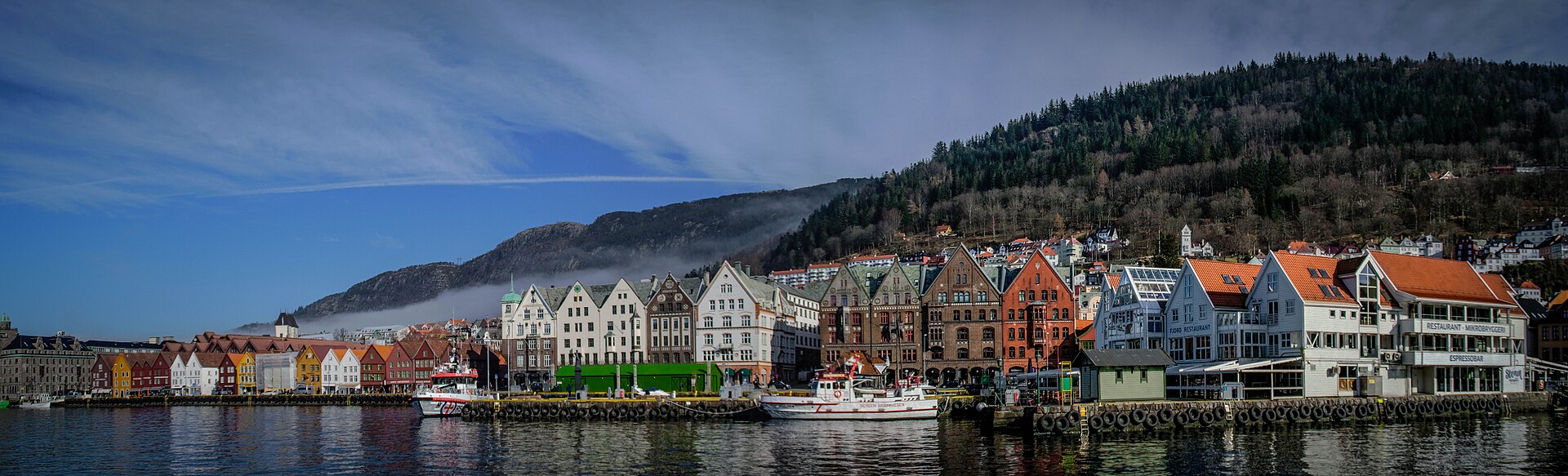
Bryggen in Bergen — the Hanseatic wharf that shipped dried fish to Europe.
Wikimedia Commons · File:Bryggen, Bergen, Norway.jpg · Photo by Iain MacFadzean · CC BY-SA 4.0
Under Denmark, then Sweden
From the late fourteenth century until the early sixteenth, Norway belonged to the Kalmar Union with Denmark and Sweden under one monarch — Denmark the real power. Sweden broke free. Norway was too weak to follow.
When the Reformation reached Scandinavia it came on Danish orders, in 1537. Church lands passed to the Danish crown. Norway’s old state machinery withered, and the kingdom became, in practice, a Danish dependency.
The seventeenth century revived mining and timber. Denmark’s wars, not least with Sweden, meant heavy taxes on Norway.
Britain’s attack on the Danish fleet dragged Denmark–Norway into the Napoleonic Wars. At Kiel in 1814 Denmark ceded Norway to Sweden. Norwegians tried for full independence, then accepted a loose union in which they kept their own constitution, signed at Eidsvoll. For many that document is the birth of the modern Norwegian state. Its date is still celebrated every year.
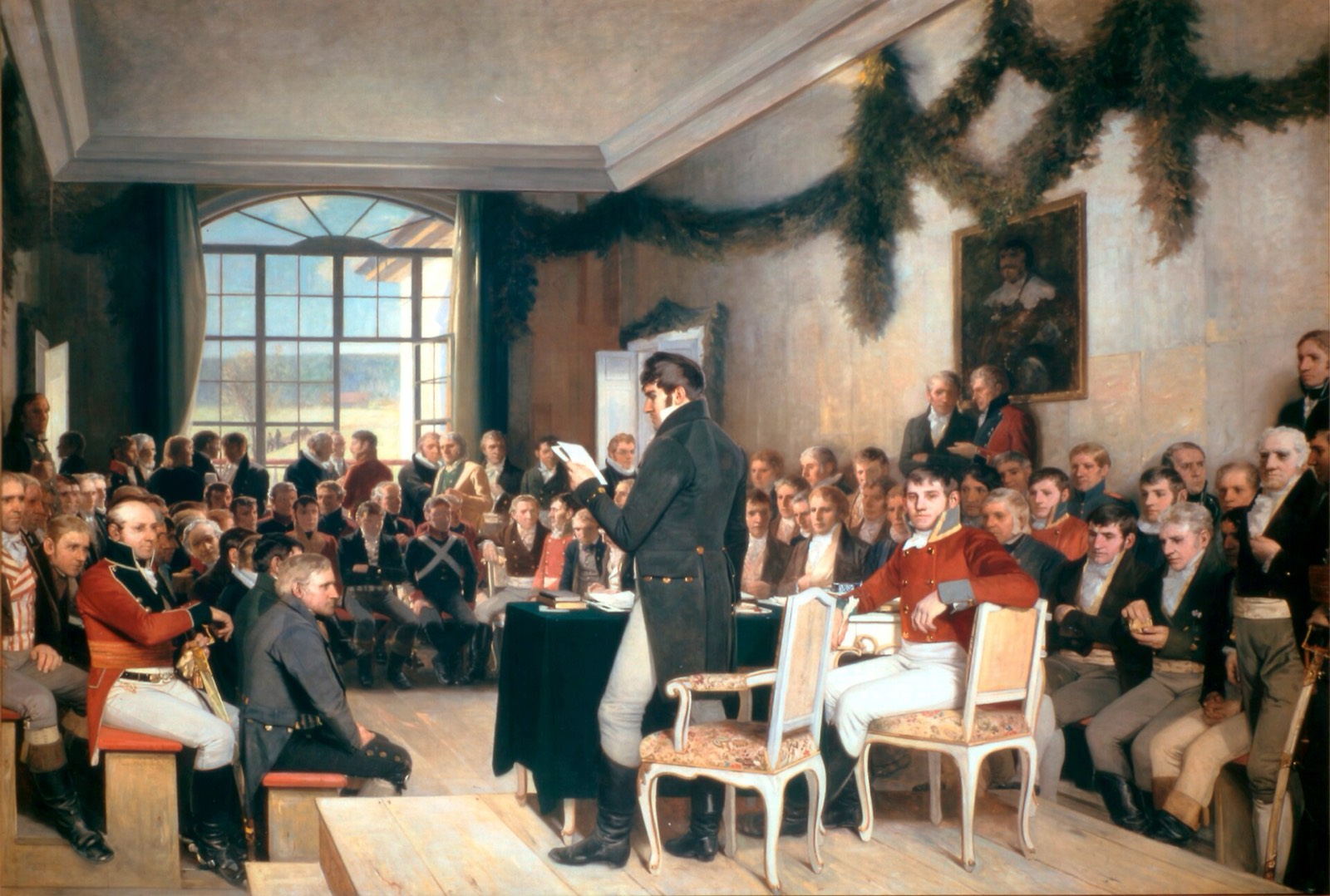
Oscar Wergeland’s Eidsvoll 1814: the assembly that wrote Norway’s constitution.
Wikimedia Commons · File:Eidsvoll riksraad 1814 edit1.jpeg · Oscar Wergeland · Public domain
A kingdom again
Improvements in medicine and a rising population forced agricultural modernisation in the nineteenth century. Still, more than 750,000 Norwegians left for America — after the Irish and the Italians, one of the largest immigrant streams to the United States.
In 1905 the union with Sweden ended. Norway became an independent kingdom with its own monarch for the first time in about 550 years.
Industrialisation followed, along with social laws to protect workers. Norway stayed neutral in the First World War. The interwar years were hard until the Labour Party took a lasting lead and steered the economy.
Neutrality was declared again in 1939. Nazi Germany invaded in 1940. After months of fighting Norway capitulated and spent the rest of the war under occupation.
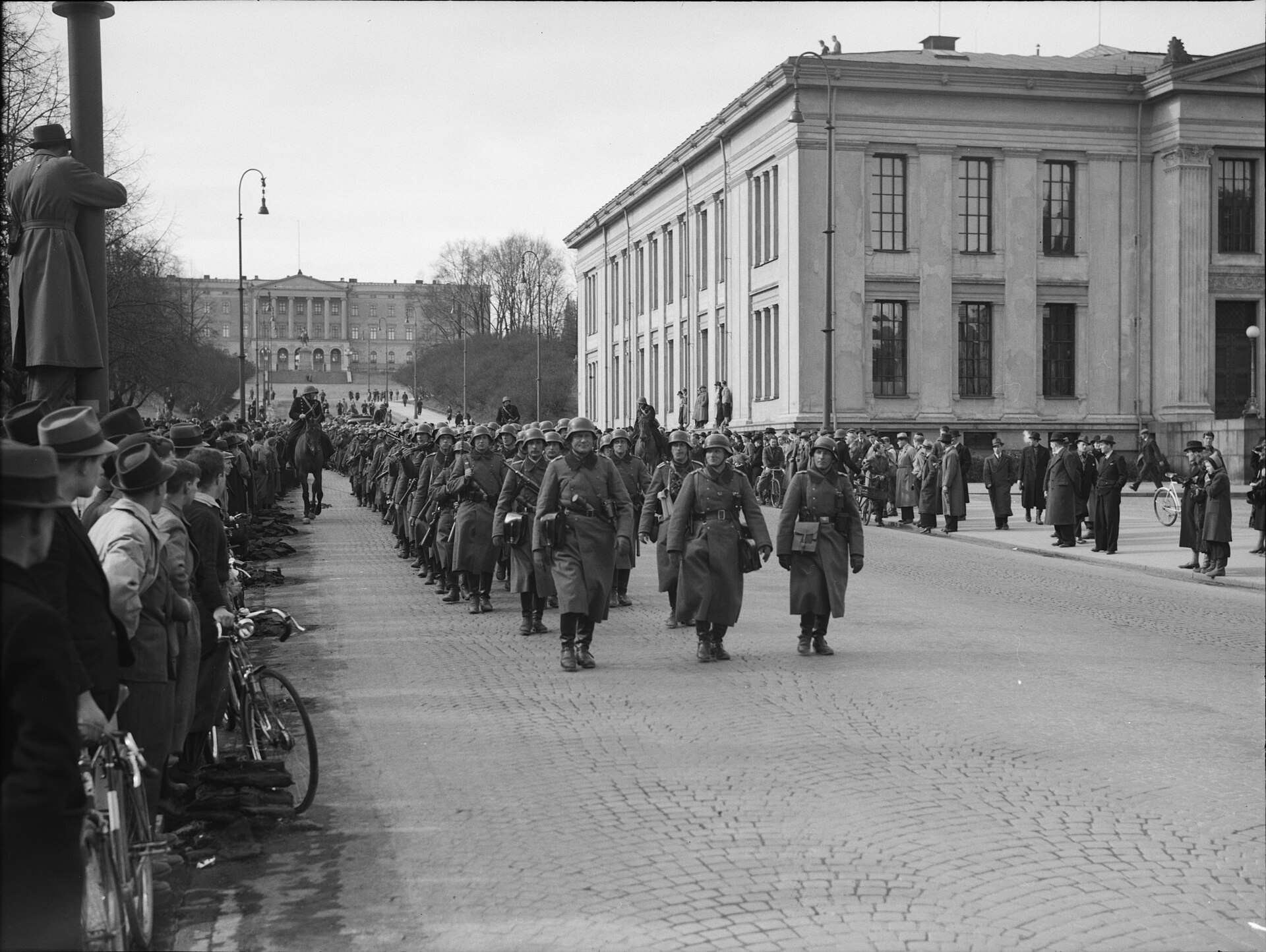
German soldiers in Oslo, 9 April 1940 — the first day of the occupation.
Wikimedia Commons · File:German soldiers in Oslo 9 April 1940.jpg · Henriksen & Steen · Public domain
Oil and the long peace
Growth and political calm after 1945 laid the foundations of the welfare state. Large North Sea oil finds from the late 1960s created a new industry; careful public ownership let the state take a lasting share of the wealth.
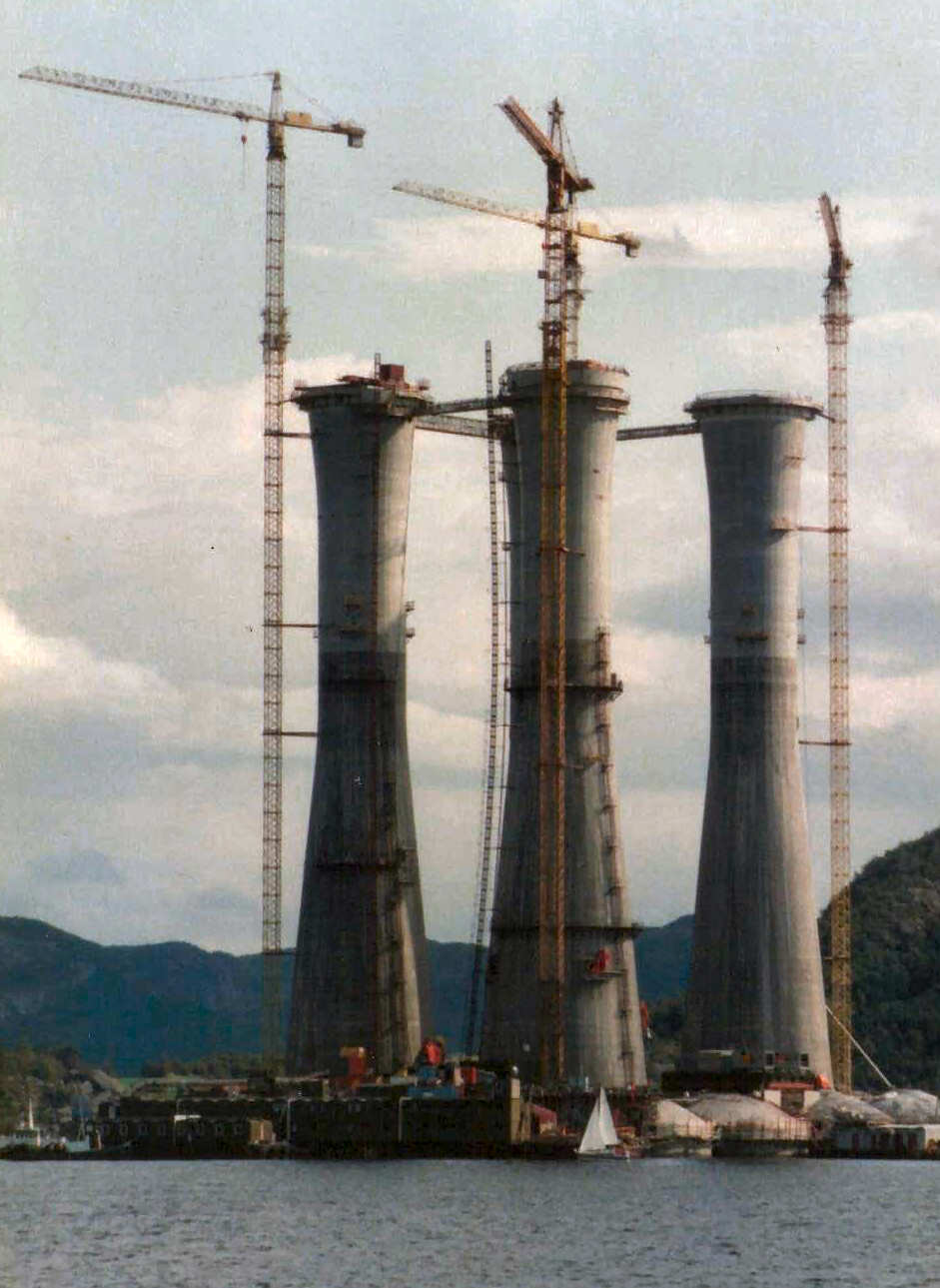
A Norwegian North Sea oil platform — the industry that funded the modern welfare state.
Wikimedia Commons · File:Oil platform Norway.jpg · Bluemoose · CC BY-SA 3.0
The 1970s brought environmental and women’s movements, deindustrialisation, and mass higher education. The 1990s liberalised and privatised parts of the economy without narrowing it, which is one reason the 2008 crash barely touched Norway.
In 2011 a lone right-wing extremist killed 77 people in a terror attack that still scars the country.
Today some five million people live in a state often ranked among the world’s most developed democracies, with the largest sovereign wealth fund on earth. From coastal hunters to Viking fleets, from Danish dependency to oil and a constitution still celebrated each May, Norway’s history is the story of a long coast that learned, late, to live well on its own.
Continue on the map
Related films
Finland · Nordic
History of Finland
Lakes, two crowns, and a republic forged in winter war — the history of Finland.
Sweden · Nordic
History of Sweden
Vikings, Vasa, and a great power that learned to live without an empire.
Iceland · Nordic
History of Iceland
Settlement, Althing, volcanoes, and a republic in the North Atlantic.
Lithuania · Baltic
History of Lithuania
From ancient pagan roots to Europe’s largest medieval state — and the long fight back to independence.