

Sweden · Nordic · History
History of Sweden
Vikings, Vasa, and a great power that learned to live without an empire.
Watch History of Sweden on YouTube@sagastube
Companion essay
Read the history of Sweden
Sweden rose from forest tribes and river trade, briefly ruled a northern empire, and then rebuilt itself as a rich, cautious democracy. The arc runs from the retreating ice to the Øresund Bridge.
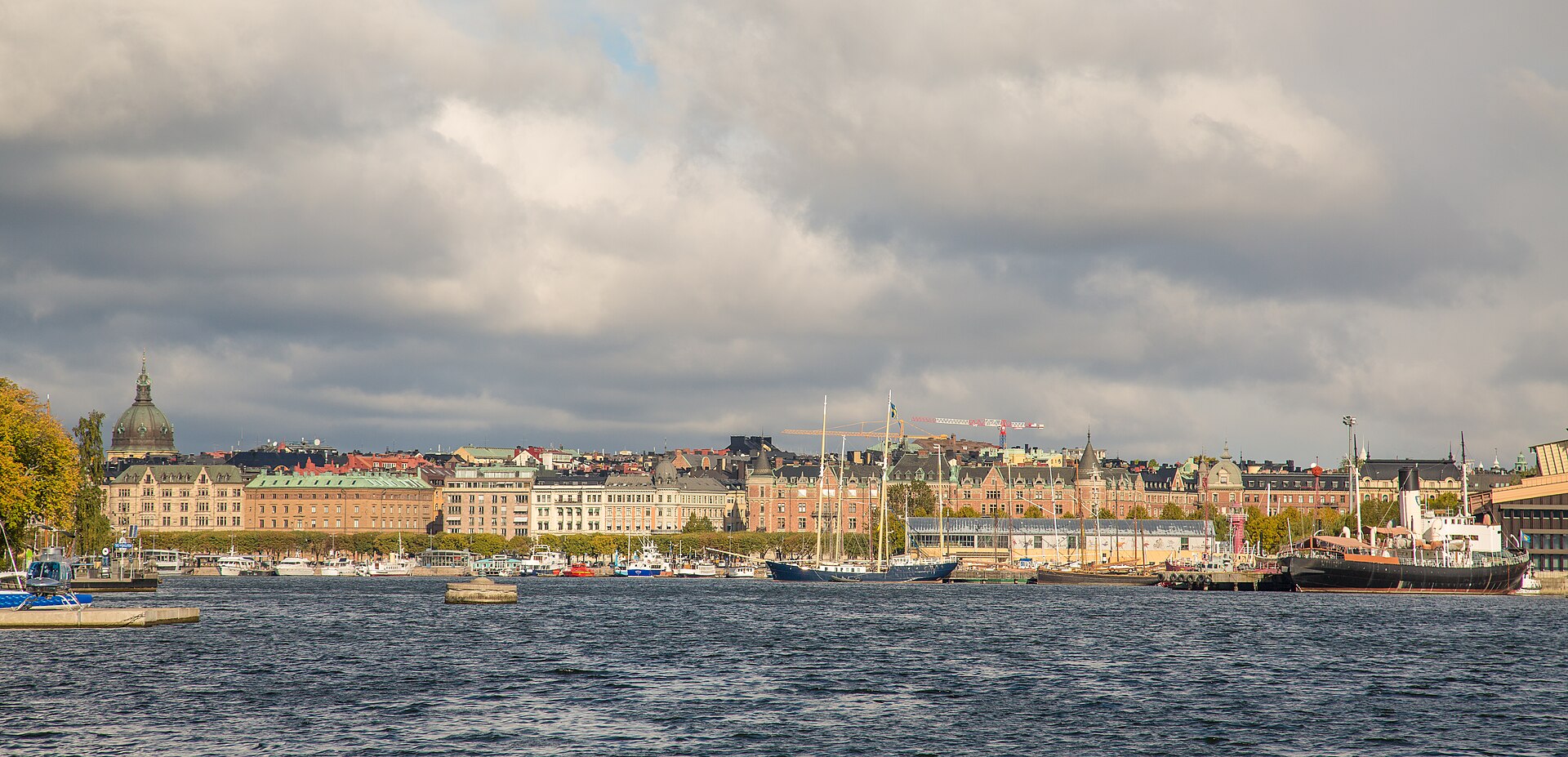
Stockholm from above — the capital Birger Jarl is credited with founding as a mineral trade hub.
Wikimedia Commons · File:Stockholm Skyline (15732915419).jpg.jpg) · Photo by Tony Webster · CC BY 2.0
Ice, farms, and Vendel
When the ice left Scandinavia, the first people lived by hunting, gathering, and fishing with simple stone tools. In the early Iron Age settlement grew denser, and agriculture became the base of economy and society.
Between about 550 and 800 Sweden entered the Vendel period. Trade eastward grew, and with it the habits that would define the next age.
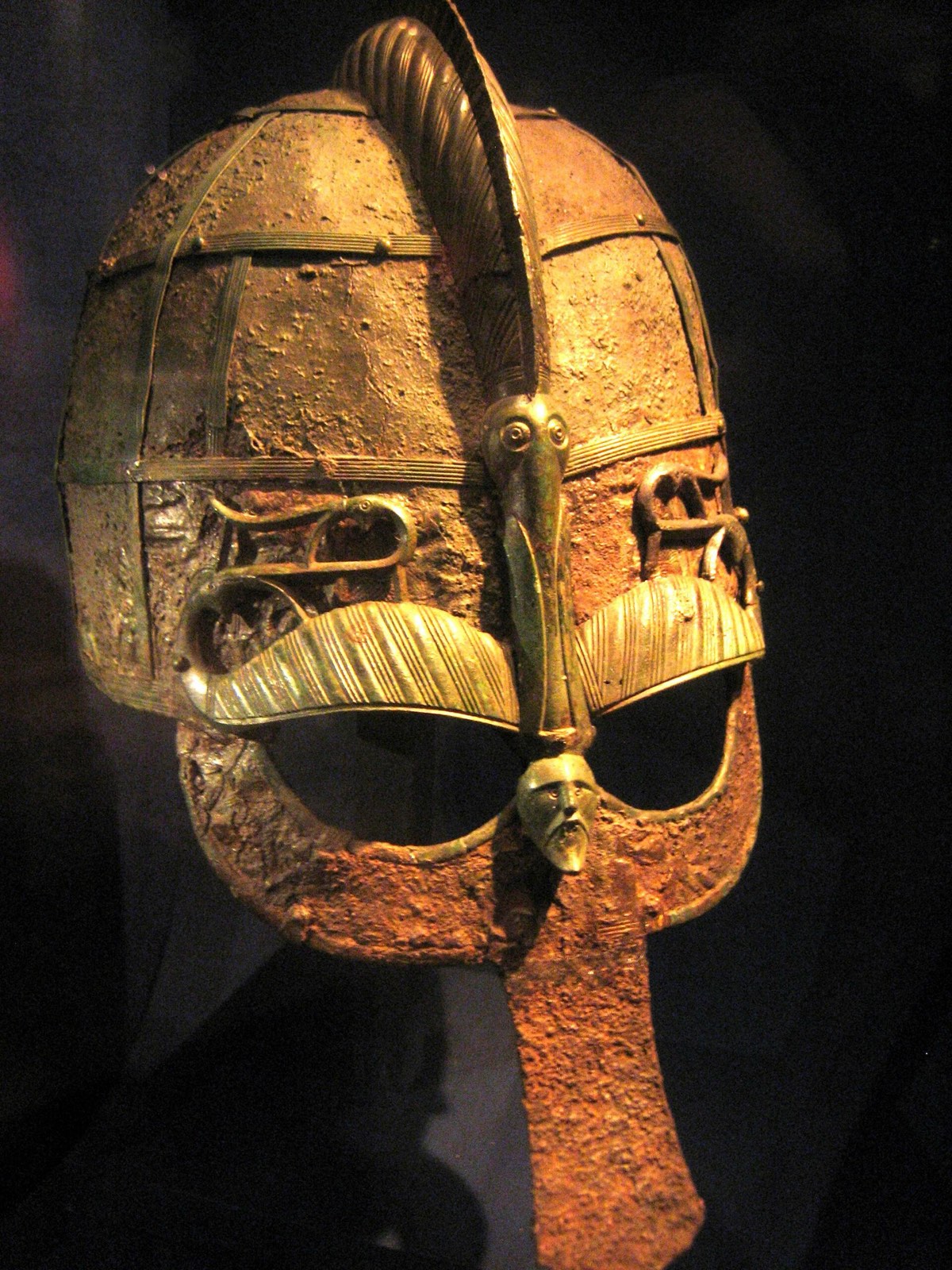
A Vendel-era helmet from a seventh-century boat grave — craft and status before the Viking Age.
Wikimedia Commons · File:Helmet from a 7th century boat grave, Vendel era brighter.jpg · Mararie / Sechinsic · CC BY-SA 2.0
Vikings east
The Viking Age extended Scandinavian reach. For Sweden it meant economic and political flourishing aimed mainly at the Baltic and beyond. Longships plundered and traded along the coasts; they also ran the rivers deep into what is now Russia, founding colonies and — in one reading of the sources — helping shape Garðaríki.
Swedes reached the Black and Caspian Seas and traded with Arab courts and Byzantium. In Constantinople the Varangian Guard took many Swedish Vikings into elite service.
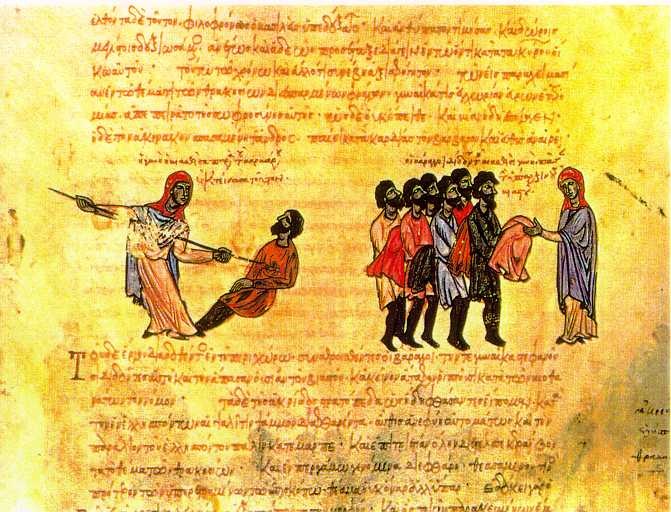
A scene from the Madrid Skylitzes — the Byzantine world where Swedish Vikings served as Varangians.
Wikimedia Commons · File:Skylitzis Chronicle iLLUMINATION.jpg · Unknown · Public domain
Ansgar, from the Frankish empire, first preached Christianity in Sweden; conversion took generations. Late in the Viking Age Erik Segersäll may have been the first king to rule both Svear and Götar; his son Olof Skötkonung carried the work on. Between them they are often credited with laying the foundations of a unified Sweden.
Birger Jarl’s kingdom
Unification was not finished with the Vikings. The Erik and Sverker clans fought a long feud until a new dynasty, the House of Bjelbo, brought it to an end.
From the thirteenth century Birger Jarl and his successors tightened the realm and took Finland through crusades. Birger is also credited with founding Stockholm, which became the hub for shipping minerals out of the inland mines.
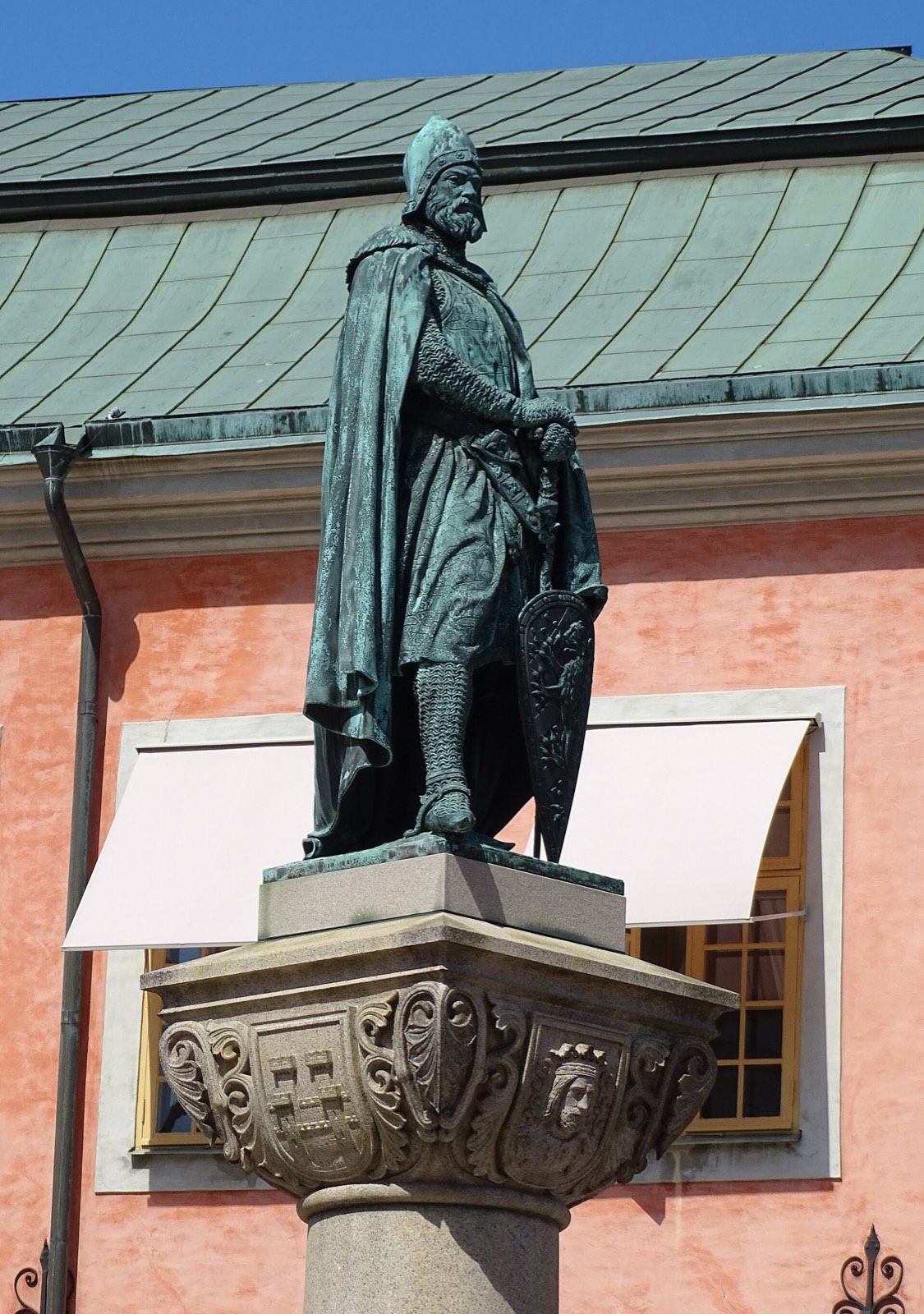
Birger Jarl on Riddarholmen — consolidator of the realm and founder of Stockholm.
Wikimedia Commons · File:Stockholm Riddarholmen Birger Jarl 01.jpg · Photo by Ad Meskens · CC BY-SA 4.0
Late in that century the nobility won its first privileges. Sweden took on a feudal shape, but with a difference: farmers remained largely free.
Kalmar, rebellion, Vasa
In the early fourteenth century Magnus Eriksson joined Sweden and Norway under one crown. He bought Scania from a weakened Denmark, then lost it again — and Gotland with it. The Black Death arrived in 1350; population and wealth fell, then recovered.
Nobles, tired of Magnus, backed Albert of Mecklenburg through eight years of civil war. Albert’s support drained away. With Margaret of Denmark’s help he was removed, and Sweden entered the Kalmar Union.
Margaret held the union together. Her successors did not. A restless nobility pushed back. Engelbrekt’s rebellion set a claim to Swedish sovereignty and helped give birth to the Riksdag. Discontent peaked in 1520 with the Stockholm Bloodbath, when the Danish king had some eighty Swedish nobles killed. Gustav Vasa, whose father died there, led the revolt. In 1523 he became king of a free Sweden.
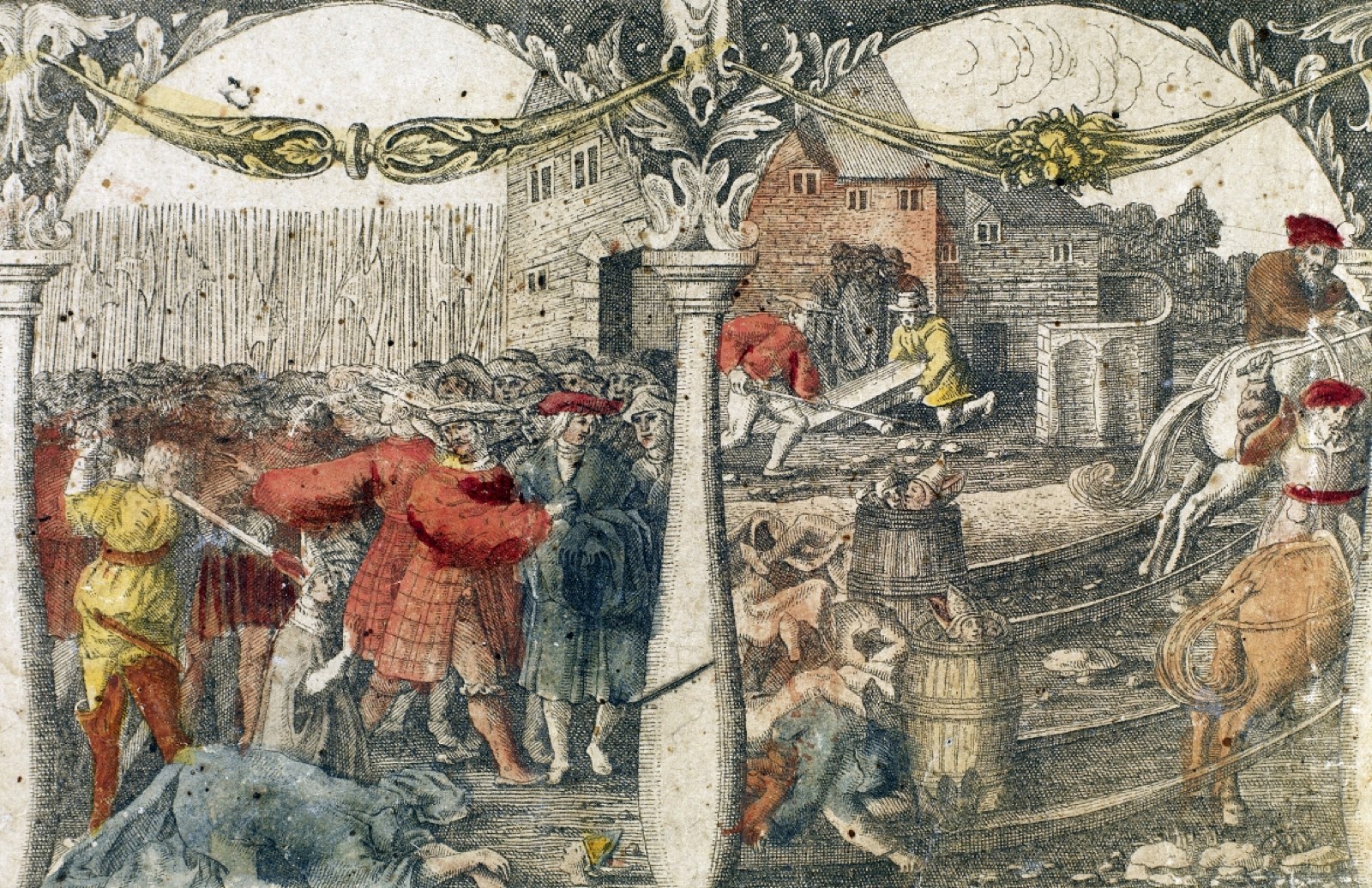
The Stockholm Bloodbath of 1520 — the executions that broke Danish rule and raised Gustav Vasa.
Wikimedia Commons · File:Stockholm Bloodbath.jpg · Unknown · Public domain
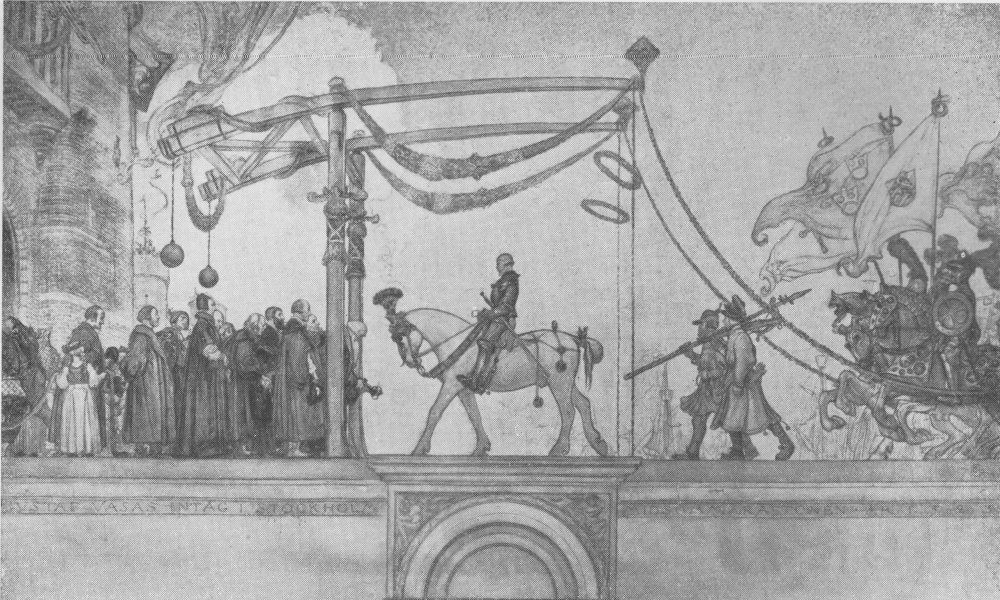
Carl Larsson’s Gustav Vasa’s Entry into Stockholm, 1523 — the founding image of a free Sweden.
Wikimedia Commons · File:Carl Larsson - Gustav Vasas intåg i Stockholm 1523.jpg · Carl Larsson · Public domain
Vasa brought the Protestant Reformation and seized church lands. He rebuilt the economy, army, and fleet, and clawed trade back from the Hansa. For many he is the father of the modern Swedish state.
Stormaktstiden
After Vasa, Sweden pushed for dominion of the Baltic. Wars carried it deeper into the eastern shore. One victory over Russia brought Kexholm and Ingria.
In the early seventeenth century Gustavus Adolphus remade the army and the tax system and entered the Thirty Years’ War on the Protestant side. He won famous victories, then fell in battle. His generals finished the war. Sweden took land in the Baltics and northern Germany, and Gotland from Denmark.
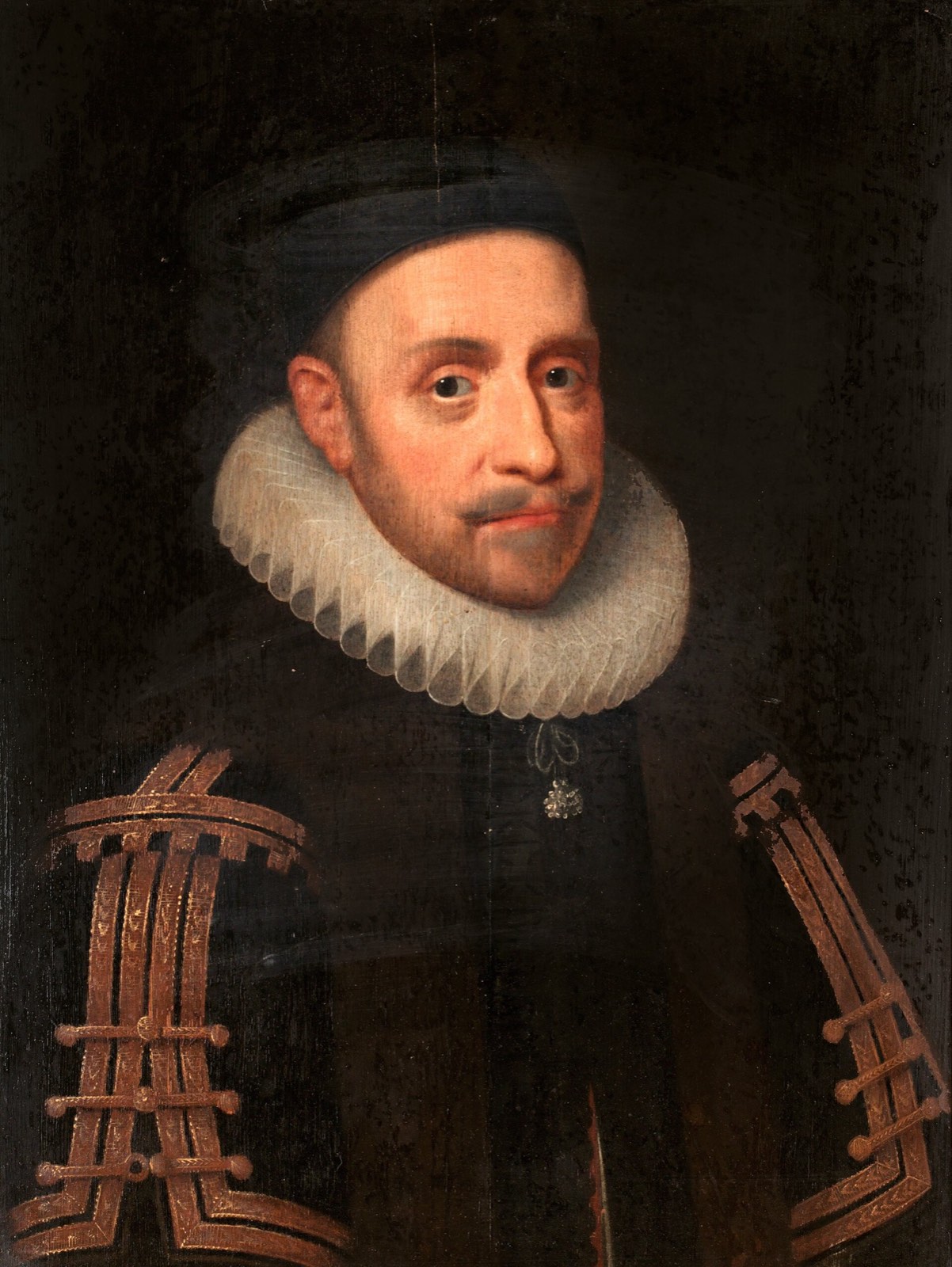
Gustavus Adolphus — the king who remade the Swedish army and entered the Thirty Years’ War.
Wikimedia Commons · File:Jacob Hoefnagel (Attr.) - Portrait of king Gustavus Adolphus of Sweden.jpg_-_Portrait_of_king_Gustavus_Adolphus_of_Sweden.jpg) · Jacob Hoefnagel · Public domain
In the Second Northern War it took still more, including Skåne and Trondheim’s fief. For a time Sweden outmatched Denmark and stood among Europe’s great powers. It even planted a short-lived colony, New Sweden, in what is now Delaware.
Fall of the empire
The peak did not last. Costly wars, a check against Denmark, and then the Great Northern War from 1700 pitted Sweden against a coalition with Russia at its head. Charles XII won dazzling early victories, then ruined his army on the road to Moscow. Returning home, he raised a new force against Norway and was killed at the siege of Fredriksten. The peace stripped Sweden of much of its Baltic empire.
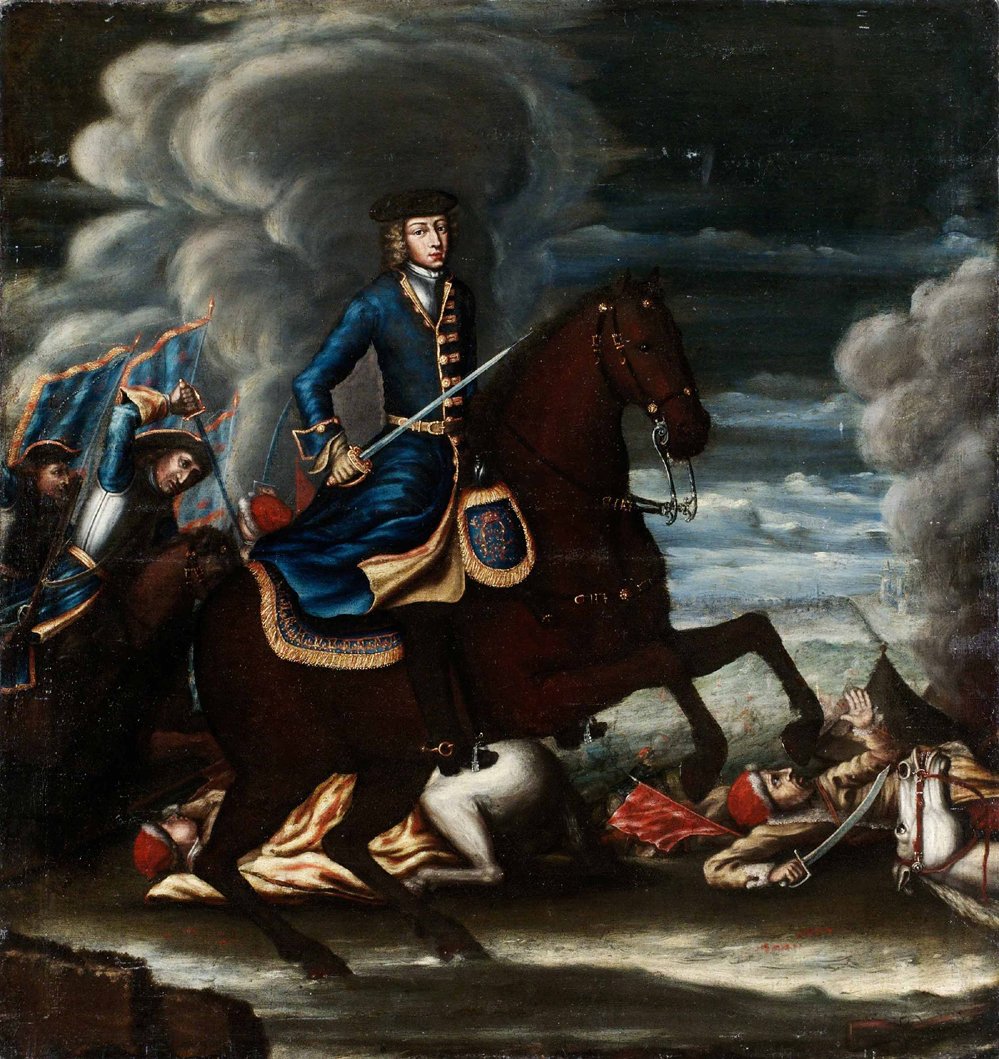
Charles XII at Narva — early brilliance in a war that would end the Swedish empire.
Wikimedia Commons · File:Karl XII till häst vid Narva.jpg · David von Krafft (attr.) · Public domain
After his death the Riksdag was strong enough to end royal absolutism. More wars and losses followed, along with economic strain — and a scientific flowering that carried the names of Carl Linnaeus and Anders Celsius across Europe.
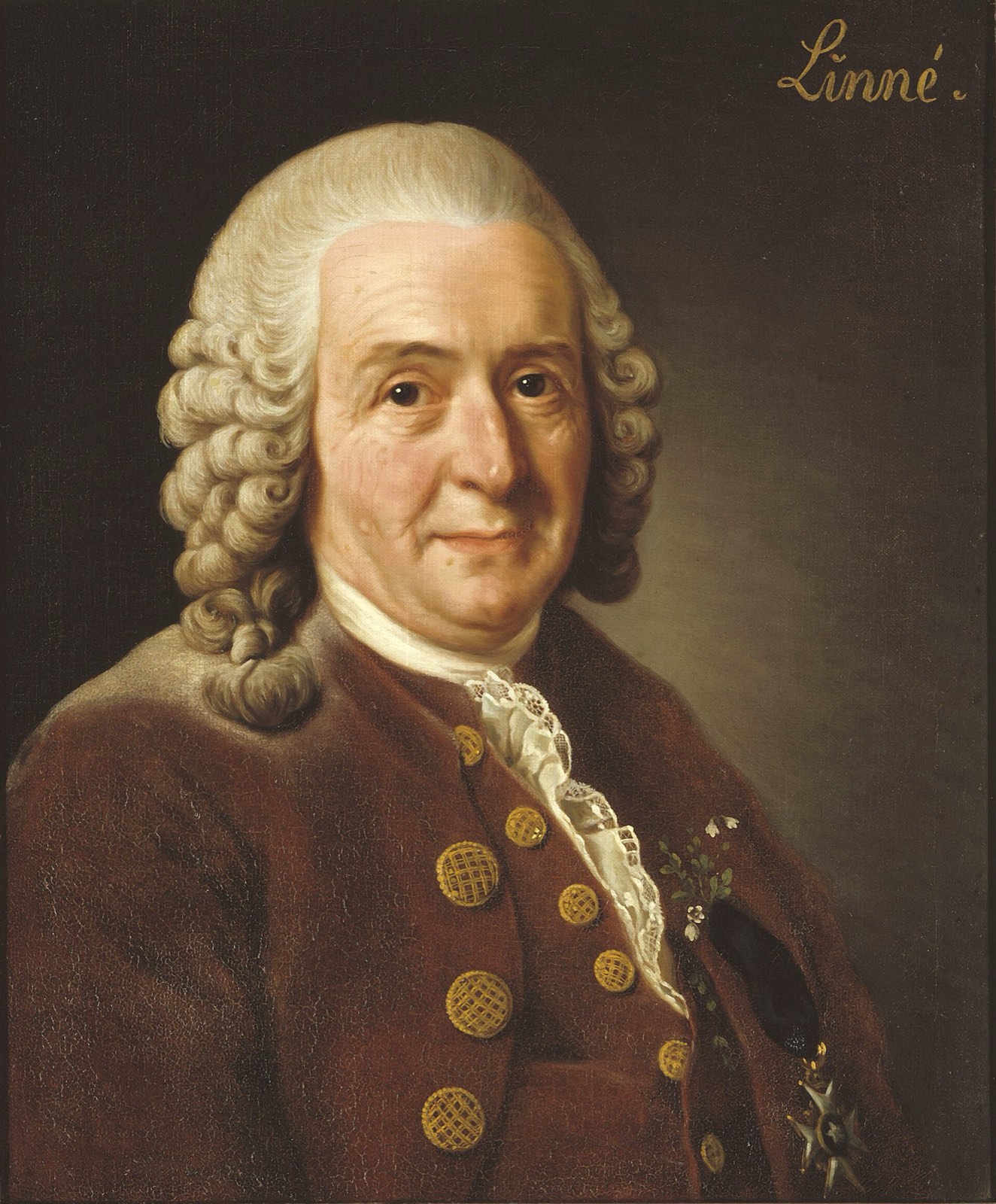
Carl Linnaeus, painted by Alexander Roslin — Swedish science in the age after empire.
Wikimedia Commons · File:Carl von Linné.jpg · Alexander Roslin · Public domain
Norway, industry, Nobel
Forced into the Napoleonic struggle, Sweden sided with Britain for the sake of its iron trade. A French marshal, Karl Johan, was elected heir. Finland could not be recovered from Russia; Norway could still be gained. Allied to Britain against Napoleon, Sweden took Norway by the Treaty of Kiel in 1814.
The nineteenth century brought liberal reforms, slow industrialisation, and limited suffrage. Late in the century most people still lived from the land, yet the population surged and more than a million Swedes left for America. Alfred Nobel’s fortune and will founded the prizes that still carry his name.
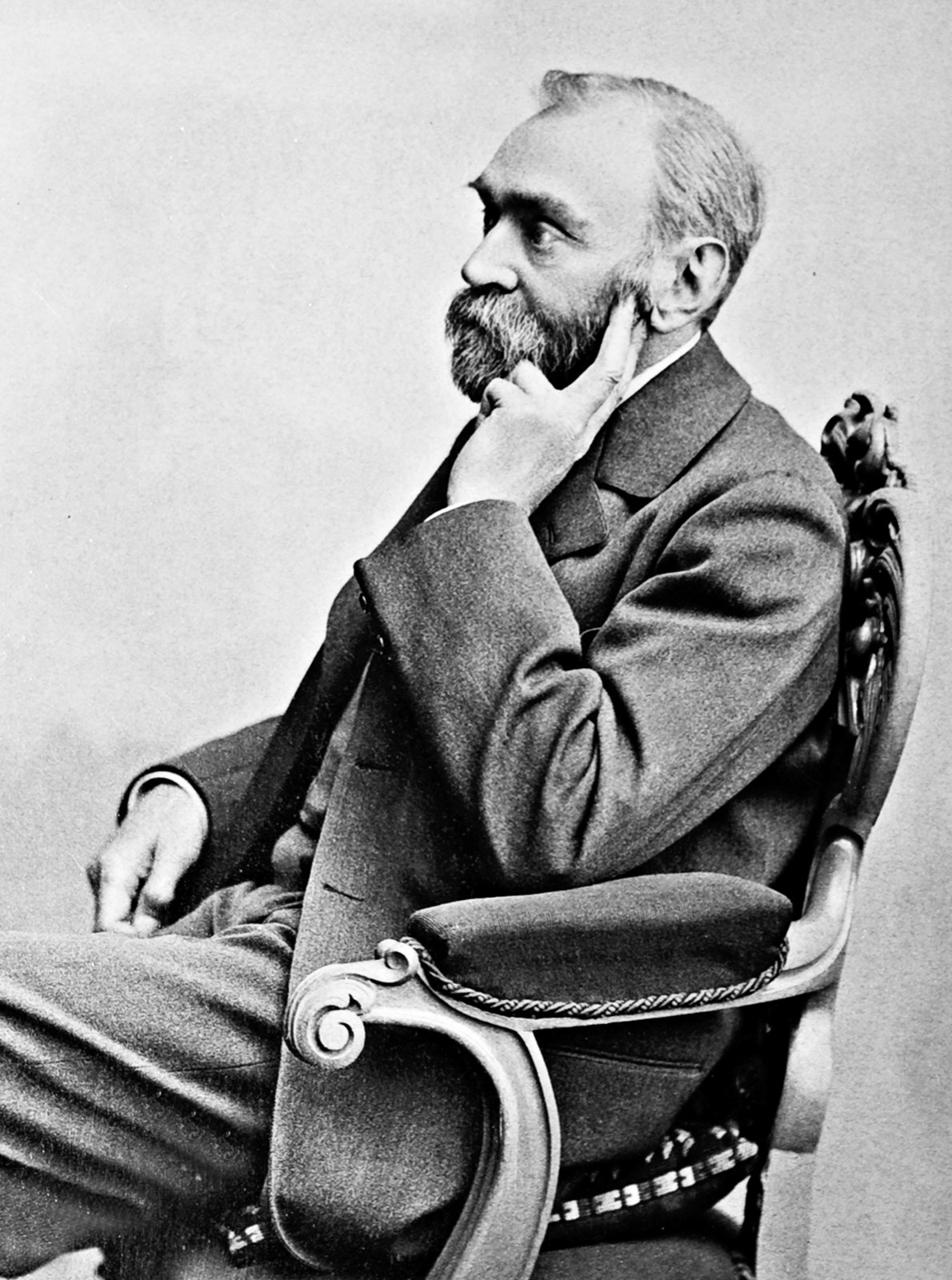
Alfred Nobel — inventor of dynamite, and of the prizes founded in his will.
Wikimedia Commons · File:AlfredNobel adjusted.jpg · Gösta Florman · Public domain
In the early twentieth century industry finally raced ahead. In a few decades Sweden joined Europe’s industrial front rank. In 1905 the union with Norway ended.
Welfare without the battlefield
All men gained the vote, and Social Democracy and labour movements rose. Sweden stayed neutral in the First World War. A diplomatic bid for the Åland Islands failed in the League of Nations.
Welfare plans drawn in the 1930s under Social Democratic rule were built out after the Second World War — again with Swedish neutrality. Unscathed by fighting, the economy doubled its GDP between 1950 and 1970 and raised a welfare system among the world’s most complete. The 1973 oil crisis still brought unemployment.
While its Nordic neighbours entered NATO, Sweden trusted non-alignment backed by a heavy defensive force.
Crisis, Europe, bridge
In 1976 non-socialist parties broke Social Democratic hegemony. The nuclear question then poisoned the politics that followed. Social Democrats returned in 1982; a few years later Prime Minister Olof Palme was shot dead on a Stockholm street. The killer was never identified, and the shock ran through Scandinavia.
The early 1990s brought a financial crisis and a bursting real-estate bubble. Welfare was cut back; parts of the public sector were privatised. In 1994 the ferry MS Estonia sank in the Baltic with 852 dead. A year later Sweden joined the European Union but kept its own currency. In 2000 the Øresund Bridge tied Malmö to Copenhagen.
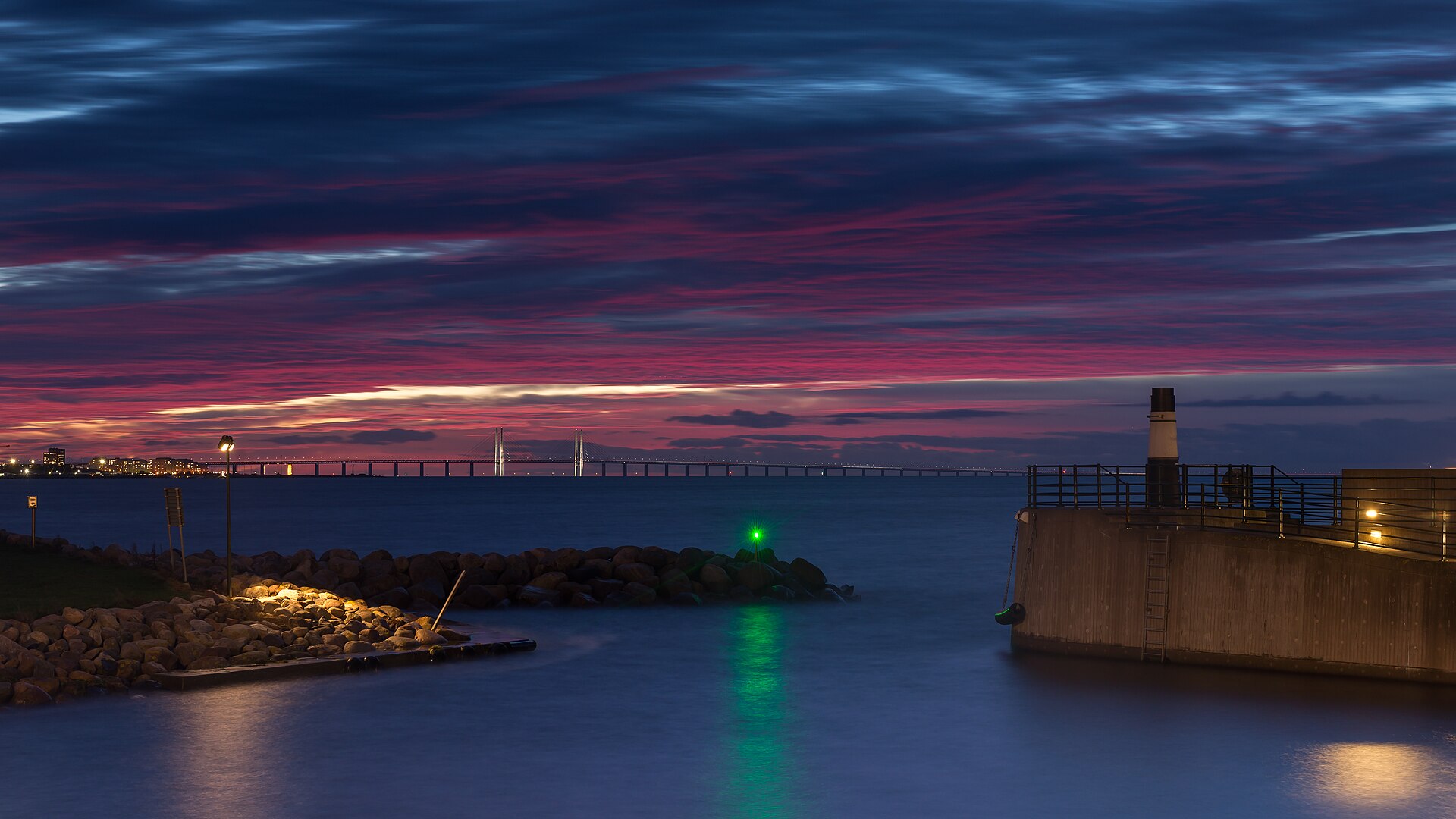
The Øresund Bridge — Sweden joined to Denmark at the turn of the millennium.
Wikimedia Commons · File:Öresundsbron October 2017 02.jpg · Photo by Arild Vågen · CC BY-SA 4.0
From forest hunters to a Baltic empire that made too many enemies, then to non-alignment and renewed prosperity, Sweden became a rich, developed country that learned, after the storm, to live without an empire.
Continue on the map
Related films
Finland · Nordic
History of Finland
Lakes, two crowns, and a republic forged in winter war — the history of Finland.
Norway · Nordic
History of Norway
Fjords, kings, occupation, and oil — the history of Norway.
Iceland · Nordic
History of Iceland
Settlement, Althing, volcanoes, and a republic in the North Atlantic.
Lithuania · Baltic
History of Lithuania
From ancient pagan roots to Europe’s largest medieval state — and the long fight back to independence.